
Last updated on June 25th, 2026 at 08:40 am
Trying to decide between lifetime deals vs SaaS subscriptions? Discover which option actually saves more money, the hidden risks of LTDs, and when subscription software is the smarter long-term choice.
You’re staring at two options: a ₹4,000 lifetime deal that promises access forever, or ₹800/month for the same tool on a SaaS subscription. The math seems obvious until you understand the concept deeply.
The cheaper option upfront isn’t always the smarter one. Sometimes that lifetime deal pays for itself in five months. Other times, you’re holding a lifetime license to software that goes dark in two years.
This is a real confusion among cheap upfront cost vs. long-term reliability, ownership vs. flexibility, and risk vs. stability. I am here to clear that confusion and provide you with clarity on lifetime deals vs SaaS subscriptions.
Whether you’re eyeing AppSumo lifetime deals or evaluating a SaaS tool your team depends on daily, I am breaking down actual costs, real risks, and the specific situations where each model wins.
So let’s get started.
Quick Answer
If you’re here for the short version, here it is.
Lifetime deals save you more money when you’re buying tools you’ll use long-term and can afford to take a calculated risk on. Think productivity tools, design utilities, or niche software that doesn’t need to be mission-critical.
SaaS subscriptions save you more money when you need something short-term, or when the tool sits at the core of your business operations, where downtime or sudden discontinuation isn’t an option.
What Are Lifetime Deals (LTDs)?
A lifetime deal is exactly what it sounds like: you pay once, you get access forever. No monthly billing cycles, no annual renewals, no “we’re increasing prices starting next quarter” emails. One payment, done.
In the SaaS vs one-time payment debate, this is the core appeal. You’re essentially buying the software outright instead of renting it indefinitely.
How LTD Platforms Work
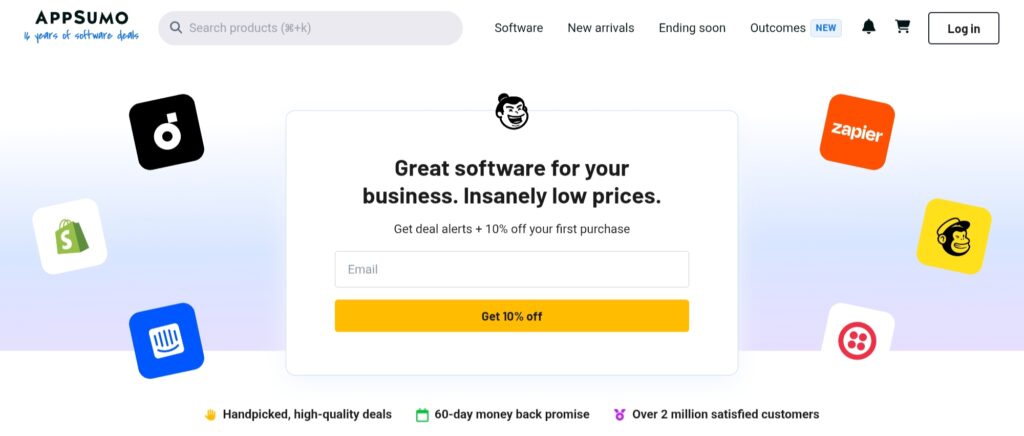
The most well-known player in this space is AppSumo: a marketplace that partners with SaaS companies to offer their tools at a steep one-time discount, usually to a limited audience for a limited time. You’ll also find platforms like StackSocial and Dealify running similar models.
The deal typically looks like this: a tool that costs ₹1,500/month is offered at ₹4,000–₹8,000 as a one-time purchase. You get lifetime access, often including future updates, within the plan tier you bought.
These deals become live for a limited time and close after that. Some deals get active again, while most don’t.
Why Companies Offer LTDs
SaaS companies don’t offer lifetime deals out of generosity. There’s always a business reason behind it, and some of them are as follows.
Early funding: Startups with a working product but a thin runway use LTDs to generate immediate cash flow. You’re essentially pre-funding their development roadmap. That’s not inherently bad, but it’s worth knowing.
Market validation: Before doubling down on a feature set or niche, companies use LTD campaigns to test real-world demand. Your purchase is also a vote of confidence, or a data point for their investor deck.
User acquisition: Getting 2,000 paying users through an AppSumo campaign is faster and cheaper than traditional marketing. The trade-off is margin, which is why some companies quietly deprioritize LTD users once they shift to a growth-stage subscription model.
None of this makes lifetime deals a bad deal. But knowing why they exist helps you evaluate whether a specific deal is a smart buy or a cash grab dressed up as a bargain.
What Are SaaS Subscriptions?
A SaaS subscription is the “rent, don’t own” model of software. You pay a recurring fee, monthly or annually, to access a tool that lives in the cloud. Stop paying, lose access. Simple as that.
It’s the dominant model in modern software for a reason: it works extremely well for the companies building the tools.
Why SaaS Companies Love the Subscription Model
Follow the money, and the subscription model makes complete sense from a builder’s perspective.
Predictable revenue: A company with 10,000 subscribers paying ₹800/month knows exactly what’s coming in next month. That predictability allows them to hire, build, and scale with confidence. It’s why investors love SaaS businesses and why valuations in this space tend to be astronomical.
Continuous updates: Because revenue keeps flowing, so does development. Subscription software tends to evolve faster, ship features more regularly, and respond to market changes more aggressively than a product someone has already paid for in full.
When you’re on a subscription, you’re not just paying for what the tool is today; you’re funding what it becomes.
Ongoing support: Monthly paying customers expect things to work. That expectation creates accountability. SaaS companies typically invest heavily in support infrastructure, uptime guarantees, and documentation because churn is their biggest enemy.
Lifetime Deals vs SaaS Subscriptions: Key Differences
The key difference between these two software models is not just about price; it is about what you’re actually buying, what you’re risking, and what you’re giving up on either side. Here is a side-by-side comparison for better understanding.
| Factor | Lifetime Deal (LTD) | SaaS Subscription |
|---|---|---|
| Pricing | One-time payment (typically ₹2,000–₹15,000) | Recurring monthly or annual fee (₹500–₹10,000+/month) |
| Long-Term Cost | Low — pays itself off within months if the tool survives | High — costs compound significantly over 2–5 years |
| Updates | Varies — some include future updates, others cap at current version | Consistent — updates are part of what you’re paying for |
| Support | Often limited — LTD users are deprioritized as company scales | Generally stronger — paying subscribers drive support investment |
| Risk | Higher — product may shut down, pivot, or abandon LTD users | Lower — stable tools with SLAs and accountability |
| Scalability | Limited — most LTDs have fixed user/feature caps per tier | Flexible — upgrade, downgrade, or expand as your needs change |
Which One Actually Saves You More Money?
It depends on three things. How long you’ll use the tool, how heavily you’ll use it, and whether the product will still exist when you need it most. Let’s break each one down with real numbers.
Short-Term Usage (0–12 Months): SaaS Usually Wins
Say you need a project management tool for a 6-month client project. The SaaS option costs ₹800/month, that’s ₹4,800 total. The lifetime deal for the same tool is listed at ₹6,500 on AppSumo.
You’ve already saved ₹1,700 by going with the subscription, and when the project ends, you cancel and pay nothing more.
This is where the “lifetime deal is always cheaper” assumption falls apart. If your usage horizon is under a year, or you’re evaluating a tool before committing to it long-term, a monthly subscription is almost always the leaner choice.
You’re not locked in, you’re not sitting on software you no longer need, and your cash stays liquid.
Long-Term Usage (2–5 Years): LTDs Win — If the Product Survives
Now flip the scenario. Same tool, same pricing, but you’re running a content agency, and this is part of your permanent stack.
| Lifetime Deal | SaaS Subscription | |
|---|---|---|
| Upfront Cost | ₹6,500 (one-time) | ₹800/month |
| Year 1 | ₹6,500 | ₹9,600 |
| Year 2 | ₹6,500 | ₹19,200 |
| Year 3 | ₹6,500 | ₹28,800 |
| Year 5 | ₹6,500 | ₹48,000 |
By year two, the lifetime deal has saved you over ₹12,000. By year five, you’re looking at ₹41,500 in savings on a single tool. Now multiply that across 4–5 tools in your stack, and you’re potentially saving ₹1.5–2 lakh over five years.
That’s a real financial advantage, but only if the product is still running, still maintained, and still relevant to your workflow three years from now. AppSumo tool survival rate is ~95%, and any tool shutdowns occur rarely.
Usage Type: Casual vs. Professional
Casual or experimental use → LTD makes sense
You’re a freelancer testing a new SEO tool. You want to try an AI writing assistant. You’re exploring a niche automation platform.
These are low-stakes, low-frequency use cases where you don’t need cutting-edge updates every quarter, and you’re not dependent on the tool to deliver client work.
A ₹3,000–₹5,000 lifetime deal here is a smart, low-risk experiment. If the tool stays useful, you win big. If it shuts down or stagnates, you’ve lost the cost of a business dinner.
Heavy or professional use → SaaS is the safer bet
Now you’re running a 12-person marketing team. Your CRM, your SEO platform, and your email marketing tool need to be top-notch. Downtime costs money. Missing features cost clients. A product pivot or shutdown could disrupt your entire operation.
This is where tools like Ahrefs, HubSpot, or Salesforce justify their subscription price through stability, support SLAs, and the guarantee that someone is accountable if something breaks. You’re not just paying for features; you’re paying for reliability and the peace of mind that comes with it.
When Lifetime Deals Are Worth It
When you buy the right tools and use them strategically, they are one of the smartest ways to build a lean, cost-efficient software stack, especially for freelancers, solopreneurs, and small businesses watching their monthly burn rate.
So when are lifetime deals actually worth it? Three conditions consistently separate a smart LTD purchase from a regrettable one.
1. Non-Critical Tools: Low Stakes, High Upside
The sweet spot for lifetime deals is software that improves your workflow without owning it. For example, a screen recording utility, a social media scheduler, a PDF editor, and a lightweight landing page builder.
None of these will collapse your business if they go offline tomorrow. You’d find a replacement within a day and move on.
2. Stable, Growing Products: Back the Right Horse
Not all deals are equal, and the product behind the deal matters far more than the discount percentage. A worthwhile lifetime deal includes these three green flags.
Healthy, recent reviews: Not a flood of 5-star ratings at launch, but consistent reviews from users who’ve been on the platform 6–12 months, and an active changelog tells a lot about a tool. How founders respond to criticism tells you more than any product demo.
Active development: A public roadmap, regular changelog updates, and a responsive community. If the last update was eight months ago and the founder has gone quiet, walk away.
Revenue beyond the LTD campaign: The best LTD companies use the campaign as a launchpad while building a parallel subscription business. If their only monetisation strategy is running lifetime deals on repeat, that’s a red flag dressed up as a bargain.
3. Long-Term Usage: Where the Maths Gets Undeniable
Lifetime deals are explicitly designed to reward long-term users. If you find a tool that works and stick with it, the same invoicing software for three years, the same design tool across your entire freelance career, the compounding savings are significant.
In a scenario where you find the right tool at the right price and that saves your monthly cost from a SaaS subscription, opting for the lifetime deal is a worthwhile option.
Related: 55+ Best AppSumo Deals Worth Buying (Great Lifetime Tools for Indian Users)
When Lifetime Deals Are NOT Worth It
Knowing when NOT to buy a lifetime deal is as valuable as knowing when to pull the trigger. Here are three scenarios where a lifetime deal is not worth it.
1. Core Business Tools: Don’t Gamble With Your Foundation
Your core business tools, such as your CRM, accounting software, email marketing software, and e-commerce backend, are the infrastructure, and if any one fails, your business feels it immediately.
You need reliable, supported, and contractually accountable tools for these tasks. And it is not a good idea to trust an LTD tool that is new in the market for these tasks over a reliable software stack available.
2. Fast-Evolving Software: Yesterday’s Lifetime Deal Is Tomorrow’s Legacy Tool
Some software categories move so fast that a “lifetime” license to the current version is essentially a ticket to obsolescence.
SEO tools are the clearest example. Google’s algorithm shifts, search intent evolves, new ranking signals emerge, and platforms have to keep pace or become useless.
A lifetime deal on an SEO tool from 2021 means working with keyword data and site audit logic that predates some of the most significant algorithm updates in recent history.
The same logic applies across software categories.
AI-powered tools: The gap between an 18-month-old model and what’s shipping today is enormous. A frozen AI tool feels genuinely outdated within a year.
Analytics platforms: Cookie deprecation, GA4 migrations, evolving privacy regulations; analytics demands constant adaptation. A frozen product here doesn’t just inconvenience you, it compromises the accuracy of decisions built on its data.
Cybersecurity tools: A lifetime deal on a security product that isn’t actively maintained creates false confidence. That’s worse than no tool at all.
3. Unknown Founders, Unproven Products: Due Diligence Isn’t Optional
Some lifetime deals are really genuine and backed by serious, funded teams, while others are solo developers who built an MVP, ran a deal for quick cash, and had no realistic plan for sustaining the product beyond that initial influx.
Some red flags you need to keep in mind.
No founder transparency: Anonymous teams, vague about pages, and founders who don’t show up in the Q&A. The best LTD founders are visible, engaged, and direct about their roadmap.
Short track record: A product live for two months running a lifetime deal campaign hasn’t proven anything yet. You’re betting on potential, not performance.
Evasive answers about sustainability: Ask “how do you plan to sustain the product after this campaign?” Serious founders answer this clearly. Vague or deflective responses are your answer.
No revenue outside the deal: A company whose only monetisation is running LTD campaigns on repeat is using buyer funds to stay alive, not to grow. That rarely ends well for lifetime users.
Related: Best AppSumo Deals for Startups on Budget (Top Picks That Actually Save Money)
Smart Strategy: Combine LTD + SaaS
Here’s the approach that rarely gets talked about in the lifetime deals vs SaaS subscriptions debate because most content frames it as an either/or decision when the most cost-effective answer is almost always both.
The operators who build the leanest, most efficient software stacks aren’t ideologically committed to one model over the other. They’re pragmatic.
They use subscriptions where reliability and evolution matter, and they use lifetime deals to cut costs everywhere else. The result is a stack that’s financially optimised without sacrificing the stability their core operations depend on.
It’s not a complicated strategy. But executing it well requires one clear distinction.
I follow this strategy, and you should also follow it.
Related: Best AppSumo Lifetime Deals I Actually Recommend
Final Verdict: Which One Should You Choose?
Both lifetime deals and SaaS subscriptions are valuable options depending on different use cases, and neither of them is better than the other.
We have discussed the benefits and limitations of both software models, when to use which one, and the smart strategy of combining both LTDs and SaaS subscriptions.
Now, you can confidently shop for tools for your business depending on your needs.
Frequently Asked Questions
Are lifetime deals really lifetime?
Technically, yes, but only as long as the company exists. If the product shuts down, your access ends with it. “Lifetime” refers to the product’s lifetime, not yours.
Why are lifetime deals so cheap compared to subscriptions?
LTDs are cheap because companies use them strategically for early funding, user acquisition, or market validation. They’re sacrificing long-term recurring revenue for immediate cash flow.
Is SaaS better than one-time payment software?
Neither is universally better. It depends entirely on the use case. SaaS wins on reliability, continuous updates, and scalability for critical tools. One-time payment software wins on long-term cost savings for stable, non-critical tools. The smartest approach is using both models strategically rather than committing exclusively to either one.
Are AppSumo lifetime deals worth it?
Yes, when you buy the right tools for the right reasons. AppSumo lifetime deals are worth it for non-critical, long-term-use tools backed by transparent, active teams.
More Articles
AppSumo Refund Policy Explained: What You MUST Know Before Buying
How to Pick the Best AppSumo Deals (Avoid Wasting Money)
AppSumo for Beginners: How to Pick Deals That Are Actually Worth It
Best Appsumo Deals For Startups Every Founder Should Consider

TechnicalStudies was started by Neeladrinath with one simple idea — give Indian students a reliable place to figure out what’s actually worth their time and money. Every recommendation here is backed by careful research, real student feedback, and honest analysis. We cover online courses, laptops, smartwatches, software deals, and learning resources — all looked at from a student’s perspective, so you can spend less time guessing and more time learning.