
Last updated on July 5th, 2026 at 07:19 pm
When creating a website, one of the most crucial choices is selecting the appropriate platform.
The ease with which you can produce content, modify designs, optimize for search engines, and expand your online presence depends on the content management system (CMS) you choose.
WordPress has continuously maintained its position as the most frequently used and trusted content management system (CMS) in the world among the numerous website platforms that are currently accessible.
More than 43% of all websites on the internet, from personal blogs and portfolio sites to major corporate platforms and international periodicals, are actually powered by WordPress.
This exceptional rate of adoption is not coincidental. WordPress has established its reputation by providing a potent blend of adaptability, simplicity of use, and a wide range of customization options, making it appropriate for both novice and expert developers.
WordPress’s dominance is largely due to its accessibility. With themes, plugins, and user-friendly editing tools, even non-technical people may create a polished website.
Additionally, WordPress’s open-source architecture, which enables extensive modification and sophisticated functionality, is valued by developers. The platform’s broad appeal can be attributed in large part to this harmony between simplicity and power.
We’ll look at 12 powerful benefits of WordPress in this article to help you understand why it still rules the CMS market.
These benefits, which range from its robust SEO capabilities and unparalleled versatility to its user-friendly interface and extensive plugin ecosystem, demonstrate why WordPress is still the best option for creating websites in the modern digital world.
What Is WordPress?
WordPress is a content management system (CMS) that doesn’t require a lot of technical experience to create, manage, and publish websites.
WordPress offers an easy-to-use dashboard where you can design layouts, add media, publish articles, and manage your entire website from one location, saving you the trouble of writing complicated code to create pages or upload material.
Fundamentally, WordPress is the engine that drives the structure and content of a website. It manages themes and plugins, arranges articles and pages, and regulates the way content is shown to users.
Because it is open-source software, developers from all over the world consistently add enhancements, themes, and plugins that increase its functionality. One of the main causes of the numerous benefits of WordPress and its widespread adoption is this cooperative environment.
WordPress.com vs WordPress.org
When people refer to WordPress, they are usually talking about one of two versions: WordPress.com or WordPress.org. Although they share the same foundation, they serve slightly different purposes.
The self-hosted version of WordPress is WordPress.org. With the ability to install unique themes, utilize thousands of plugins, and change the functionality of the site as needed, it allows users total control over their website.
Because it provides the greatest flexibility and customization, this version is frequently chosen by companies, developers, and professional bloggers.
On the other side, WordPress.com is a hosted platform that takes care of the hosting, maintenance, and technical setup. Beginners who wish to quickly establish a website without having to deal with server management will find it easier.
However, unless you upgrade to higher-tier plans, there are some restrictions on customization and plugin usage.
12 Powerful Benefits of WordPress
1. Beginner-Friendly and Easy to Use
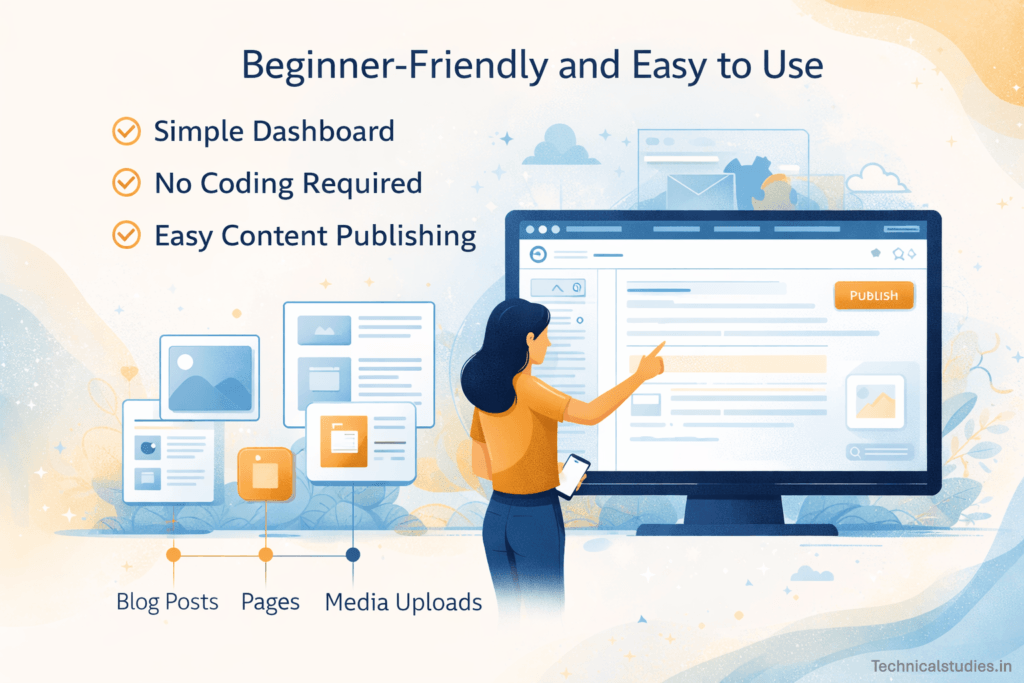
One of the most significant benefits of WordPress is its user-friendly interface, which enables even non-technical individuals to manage websites.
WordPress offers an easy-to-use dashboard that allows users to manage almost every aspect of their website from one location, in contrast to many traditional web development systems that demand coding expertise.
The WordPress dashboard is made with clarity and simplicity in mind. Without exploring complex settings, users can build pages, publish blog posts, manage media assets, install themes, and set up plugins from the admin interface.
Beginners can concentrate on content rather than technical setup because most actions are completed using visual menus and editors.
Building and maintaining a website doesn’t require any coding experience, which is another significant benefit.
Plugins add functionality like contact forms, SEO tools, or security features, whereas WordPress themes manage the visual style. This implies that users don’t need to write a single line of code to build a fully functional website.
Additionally, content publication is quite simple. For instance, all it takes to create a blog post is to click “Add New Post,” write the content, add pictures or videos, and then click “publish.”
In a similar vein, media items like photos and documents may be uploaded straight through the integrated media library, and pages like “About” or “Contact” can be developed in a matter of minutes.
2. Thousands of Themes for Custom Design
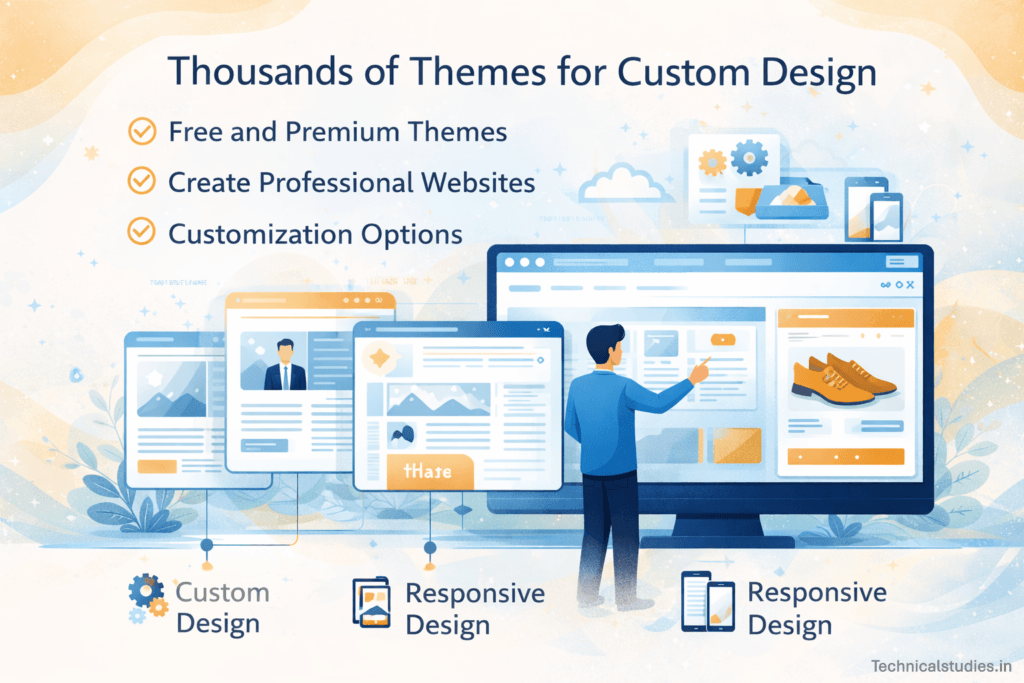
Another significant advantage of WordPress is its extensive library of themes, which allows users to create professional websites with little effort. A theme determines a website’s overall appearance, including layout, colors, typography, and page structure.
WordPress provides dozens of free and premium themes, making it simple to pick a design that fits practically any sort of website.
The WordPress theme directory contains free themes that are suitable for beginners who wish to establish a site quickly and without spending money.
Premium themes, which are available from marketplaces and developers, include sophisticated features, distinctive layouts, and more customization choices.
With these themes, users can quickly and easily construct websites with a polished appearance. It only takes a few clicks to apply a theme and change your website’s visual appearance.
Additionally, the majority of contemporary WordPress themes are totally responsive, which means they instantly adjust to various screen widths.
This guarantees that your website looks fantastic and works well on desktop, tablet, and smartphone devices, which is crucial for search engine performance and user experience.
Also Read: Best Website Builders for Beginners
3. Massive Plugin Ecosystem
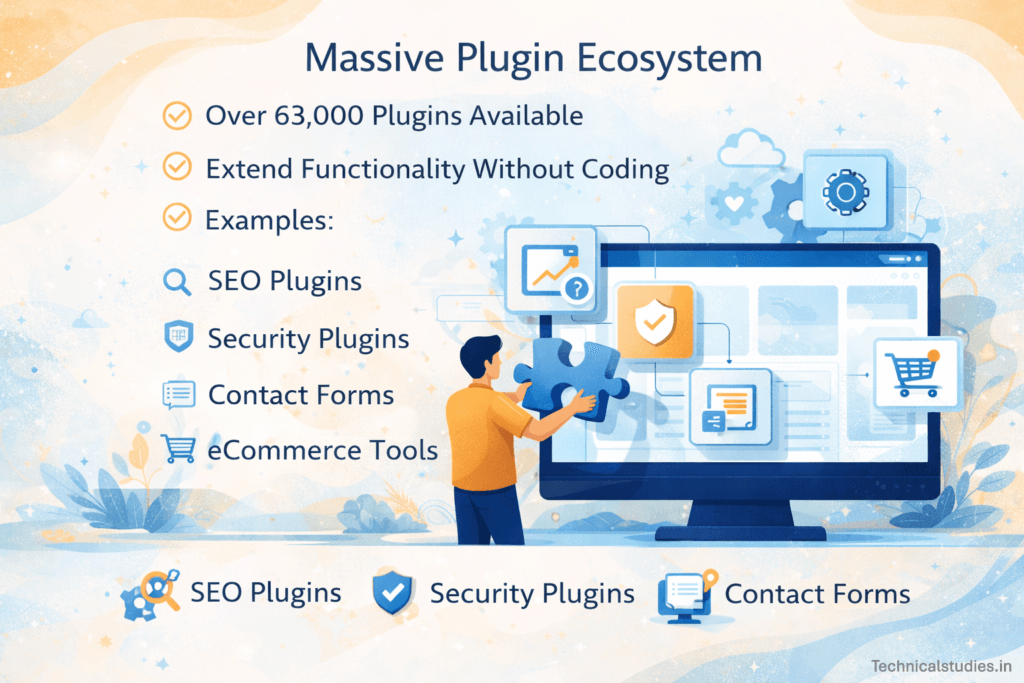
One of the most powerful benefits of WordPress is its extensive plugin ecosystem, which enables users to add advanced functionality to their websites without writing code.
Plugins are simple software extensions that extend the functionalities of a website, making WordPress extremely flexible and adaptable to a variety of needs.
More than 63,000 plugins covering nearly every feature a website could need are available in the official WordPress plugin directory alone. Users can quickly increase the functionality of their site by installing and activating plugins straight from the dashboard with a few clicks.
SEO plugins, for example, can help optimize content and boost search engine rankings. Security plugins safeguard websites from viruses, spam, and unwanted access.
Using contact form plugins, businesses can simply collect queries and feedback from visitors. eCommerce plugins may turn a basic website into a fully functional online store complete with product listings, payment gateways, and order management.
This huge plugin ecosystem is one of the primary reasons WordPress continues to be the most adaptable and extensively used content management system worldwide.
4. Highly SEO-Friendly Platform
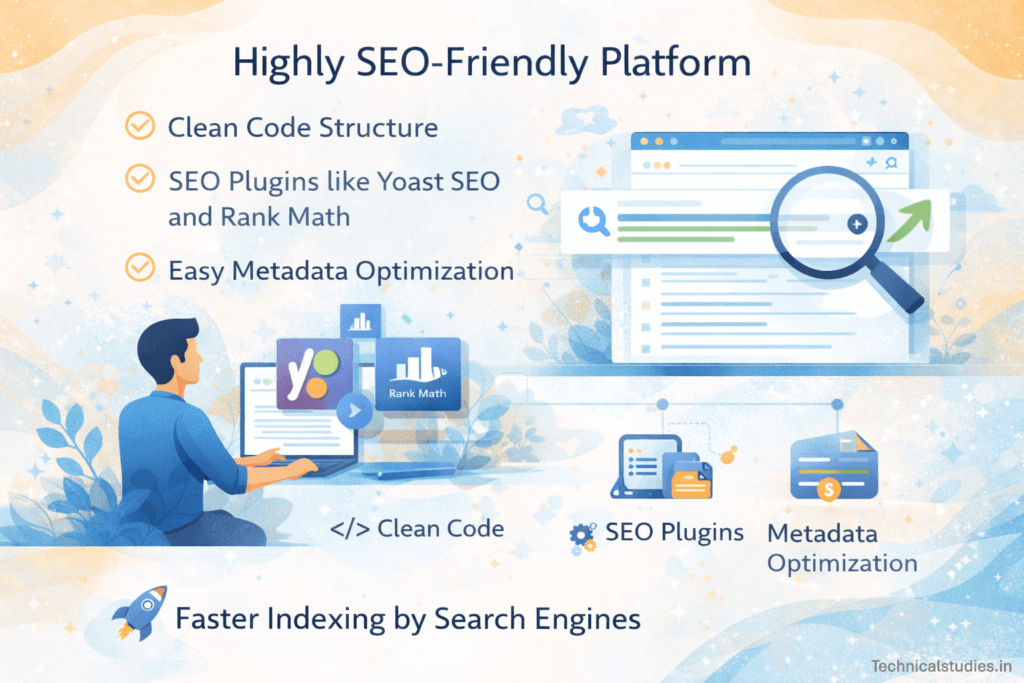
WordPress is natively optimized for search engines, which makes it simpler for websites to appear in search results. This is one of the major benefits of WordPress.
The platform’s clean, organized code base makes it easier for search engine crawlers to comprehend the content of websites. The way pages are indexed and shown in search engine results is enhanced by this hierarchical architecture.
Additionally, WordPress offers strong SEO features that make optimization easier for both novices and experts.
Within the content editor, users may improve page names, meta descriptions, keywords, and readability with well-known plugins like Yoast SEO and Rank Math.
Without requiring technical knowledge, these plugins offer real-time suggestions to enhance on-page SEO.
The ease of managing metadata, such as title tags, descriptions, alt text for images, and URL structures, is another benefit.
This degree of control frequently results in quicker indexing and better exposure in search results by assisting search engines in determining the importance of each page.
Also Read: Best SEO Tools To Enhance Your Website Performance [Expert Picks]
5. Fully Customizable and Flexible
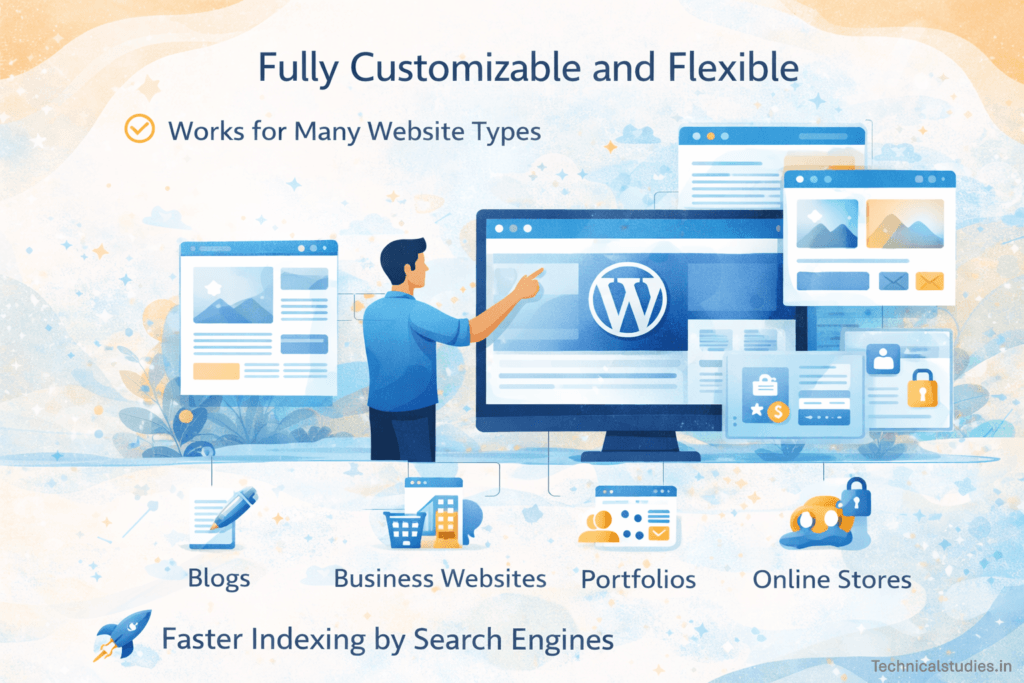
Another significant advantage of WordPress is its brilliant versatility, which allows it to accommodate virtually any form of website.
Unlike many website builders, which limit functionality to specific themes or use cases, WordPress may be tailored to fulfill a variety of objectives, from basic personal projects to big business platforms.
For instance, commercial websites depend on WordPress to display services, corporate details, and client endorsements, while bloggers utilize it to produce articles and manage content effectively.
Designers, photographers, and writers are examples of creative professions who frequently create WordPress portfolio websites to showcase their work in an eye-catching manner.
With eCommerce plugins that allow for product listings, shopping carts, and payment processing, WordPress can also run online storefronts.
It also enables membership websites, where users who register can access community platforms, online courses, and special content.
Because of its flexibility, WordPress is still the platform of choice for people, startups, and big businesses seeking a website solution that can evolve as their requirements do.
6. Cost-Effective Website Solution
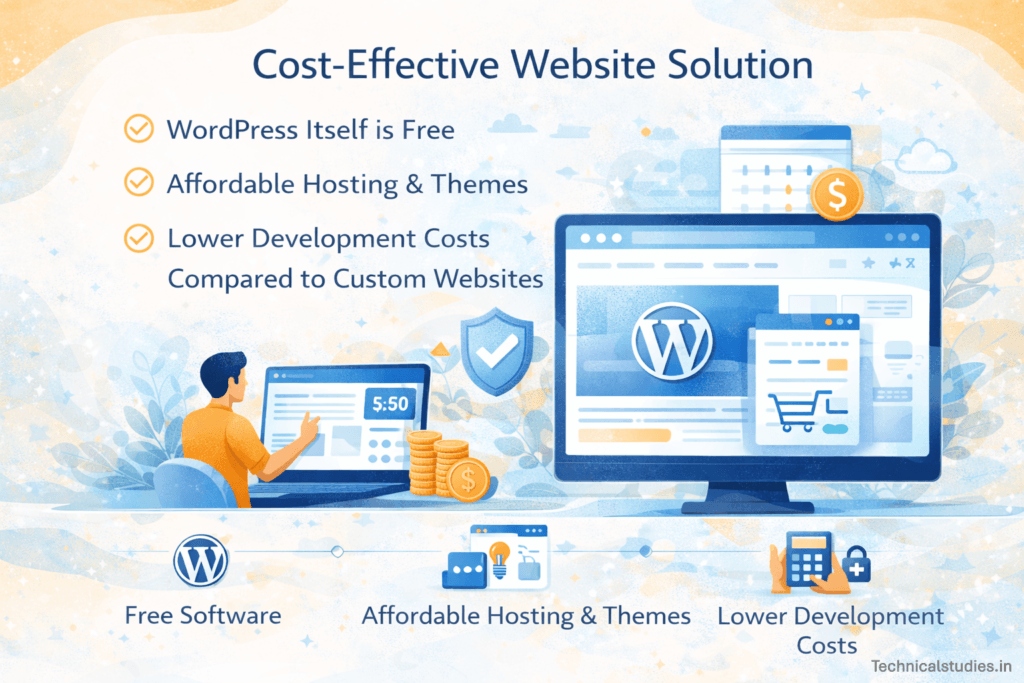
WordPress provides a cost-effective approach to creating and maintaining a professional website, which is one of the most useful benefits of WordPress.
Because WordPress is open-source, anyone can download, use, and alter it without having to pay licensing costs, making it entirely free.
The primary costs are usually domain names, web hosting, and optional premium themes or plugins, which are normally less expensive than developing a unique website.
Numerous hosting companies provide WordPress-optimized plans that make it easy and affordable to establish a website.
7. Mobile-Friendly and Responsive
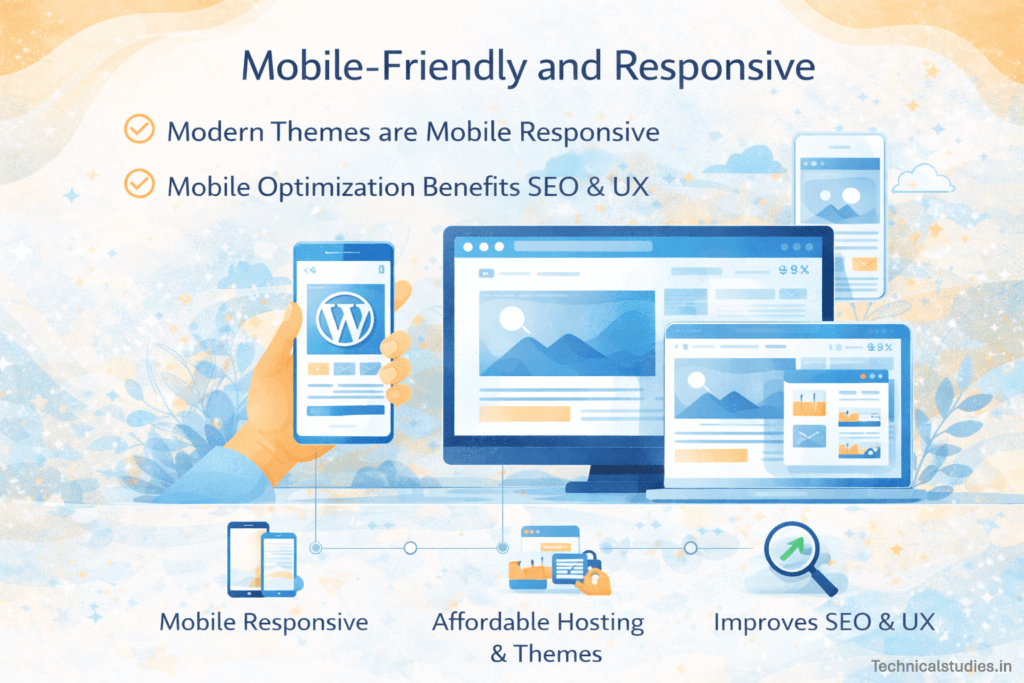
Strong support for mobile-friendly website design is one of WordPress’s key advantages.
The majority of contemporary WordPress themes are constructed with responsive frameworks, which means that the layout of the website automatically adapts to various screen sizes, including desktop, tablet, and smartphone screens.
Regardless of the device they use, this responsiveness guarantees that users can effortlessly navigate your website, read content, and interact with pages.
Because search engines favor websites that offer a seamless mobile experience, mobile-friendly design is also essential to search engine optimization (SEO).
WordPress makes it easier for websites to attract and keep visitors by utilizing responsive themes, which also enhance user experience and search visibility.
Also Read: How to Improve Website User Experience: 12 Proven Optimization Tips
8. Strong Security Features
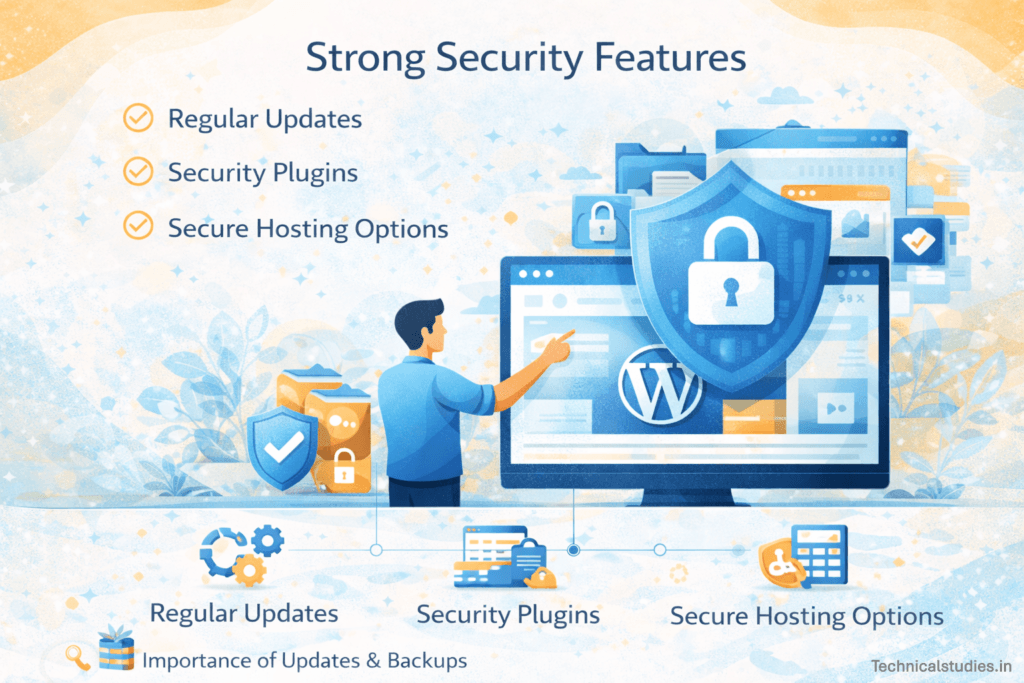
Another significant advantage of WordPress is security, particularly for websites that handle sensitive content or user information.
Because the platform is actively maintained by a worldwide development community, updates are frequently published to address vulnerabilities and enhance security in general.
Additionally, a variety of security plugins that help shield websites from dangers like malware, brute-force attacks, and spam are supported by WordPress.
Firewalls, login security, and real-time monitoring are some of the additional security measures that these products provide.
Additionally, selecting dependable and safe hosting companies enhances the security of websites.
9. Large Global Community and Support
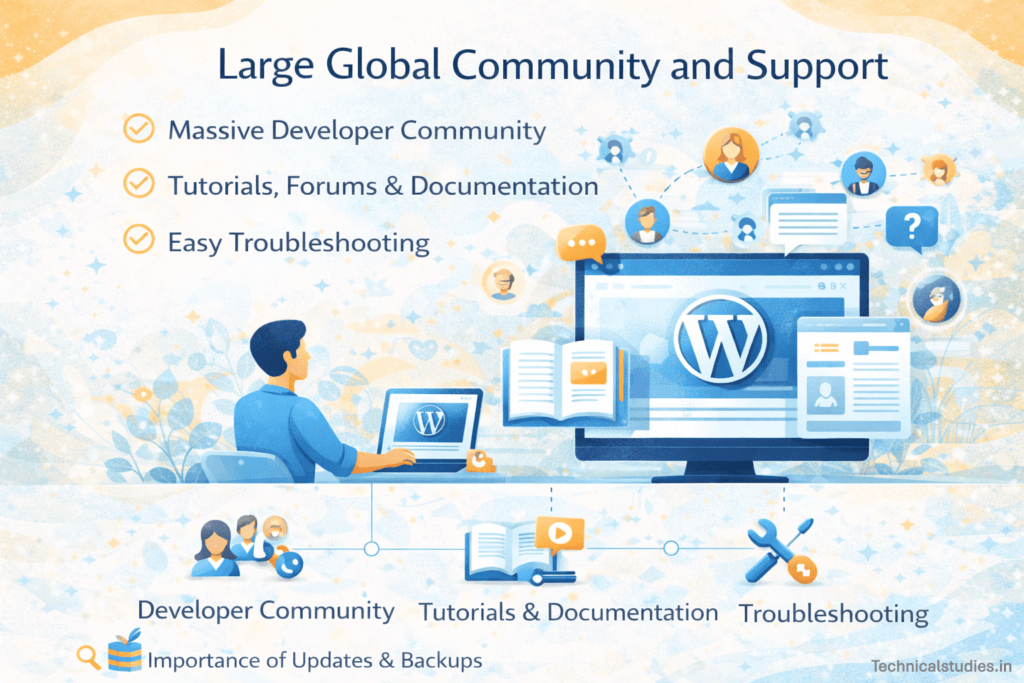
The vast worldwide community of developers, designers, and users that consistently work to enhance WordPress is one of its greatest benefits. WordPress has created one of the busiest ecosystems in the web development industry because it is open-source and extensively used.
This community offers a wealth of tools that aid in learning and problem-solving, such as tutorials, forums, documentation, and video guides.
Reliable advice is always available, whether you are a novice creating your first website or a developer modifying sophisticated features.
As a result, compared to many other platforms, troubleshooting WordPress problems is frequently simpler because answers and professional guidance are easily available online.
10. Scalable for Growing Websites
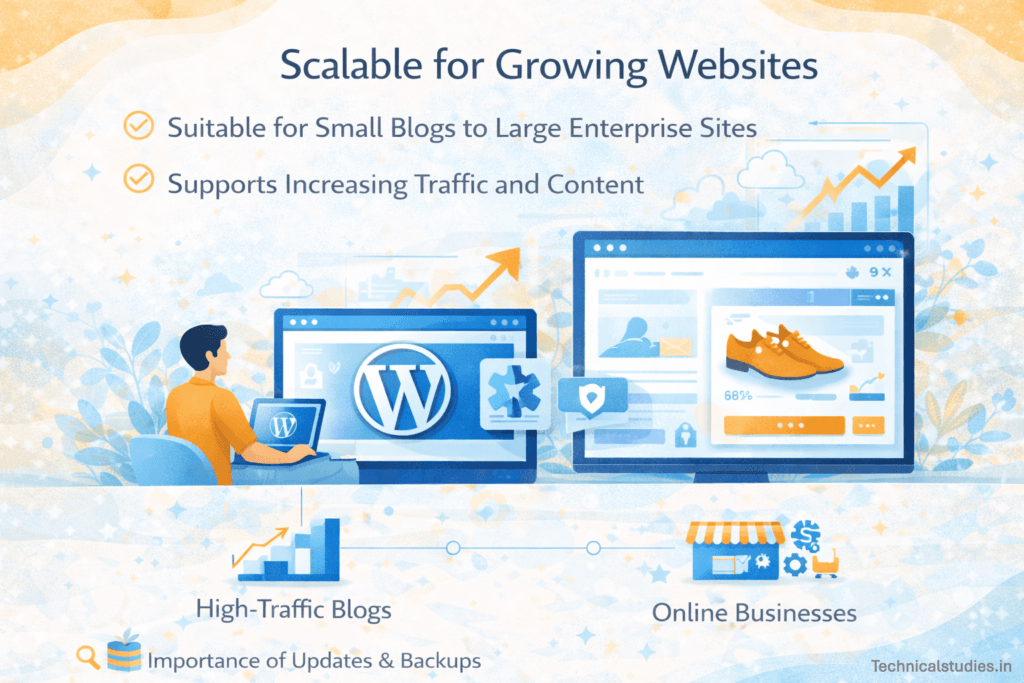
The scalability of WordPress as your website expands is another significant advantage.
WordPress can adjust to growing demands without requiring a full rebuild, whether you start with a tiny personal blog or grow into a sizable business platform.
The platform is built to manage expanding content volumes, increased traffic, and new features.
You may improve performance with improved hosting, caching plugins, and optimized themes when your website gains more users or publishes more pages.
Because of its adaptability, WordPress is a long-term solution rather than a platform that must be replaced as your website grows.
Also Read: Best Web Analytics Tools To Improve Your Website
11. Easy Integration With Popular Tools
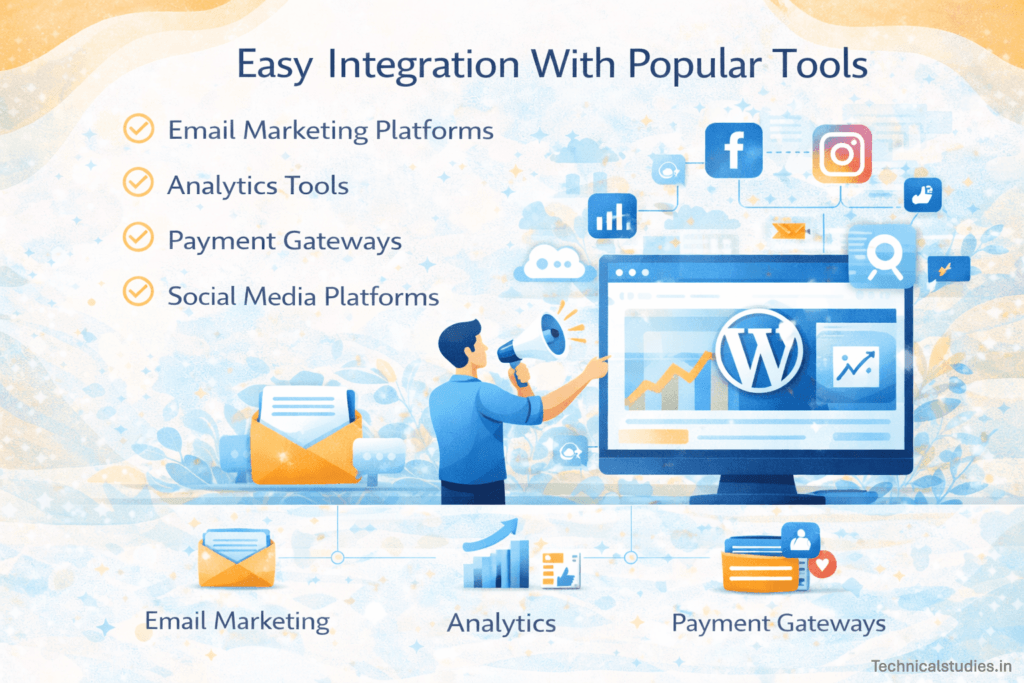
WordPress’s ability to easily interface with a variety of digital tools and services is another important advantage. This facilitates the management of marketing, analytics, and commercial operations by website owners on a single platform.
Businesses may execute automated campaigns and expand their subscriber lists by integrating WordPress with email marketing tools. Additionally, it connects with analytics tools that offer information on website performance, traffic sources, and visitor behavior.
For online businesses, WordPress supports payment gateways, enabling secure transactions and smooth checkout experiences.
12. Perfect for Blogging and Content Marketing
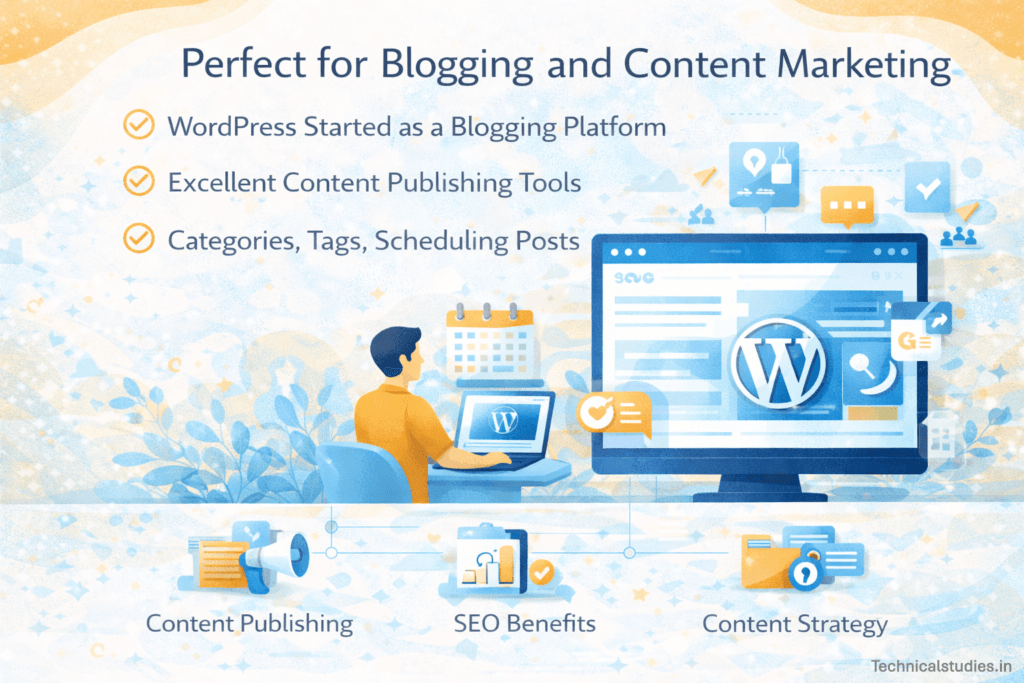
WordPress started out as a blogging platform and continues to provide some of the best tools for producing content.
The platform is popular among bloggers and content marketers since it is made to make content creation, organization, and management easy.
WordPress enables users to organize information using tags and categories, which facilitates the navigation of relevant topics for both visitors and search engines.
It also has tools like media management, post scheduling, and a robust editor that makes publishing and formatting easier.
Because of these features, WordPress is incredibly useful for long-term content strategy and SEO, enabling websites to regularly post optimized articles that draw in search traffic and engage users.
Also Read: Best Content Marketing Software To Boost Your Engagement [AppSumo Lifetime Deals]
Choosing the Right Hosting for a WordPress Website
Even though WordPress offers the software required to create and maintain a website, web hosting is still necessary for the website to be available online.
In essence, hosting is the server space used to hold the databases, files, graphics, and content of your website. The hosting server sends the files to the visitor’s browser when they come to your website.
Choosing reliable hosting for WordPress websites is critical since it has a direct impact on website speed, security, and overall performance.
Many hosting companies provide WordPress-specific plans that include features like automated upgrades, enhanced caching, and simplified installation.
Hostinger is a popular choice because it offers WordPress-optimized hosting circumstances that boost server efficiency and loading speed.
Managed WordPress hosting services usually include one-click WordPress installation, security monitoring, and frequent backups, making it easier for beginners to start and maintain their websites.
Choosing a dependable hosting company guarantees that a WordPress website can handle traffic while keeping consistent uptime and performance.
FAQs – Benefits of WordPress
Is WordPress good for beginners?
Yes, WordPress is considered one of the most beginner-friendly website platforms available. Its intuitive dashboard, visual editor, and extensive theme ecosystem allow users to create websites without coding knowledge. Beginners can easily publish posts, manage pages, and install plugins while gradually learning more advanced features as their website grows.
Why is WordPress so popular?
WordPress is popular because it combines ease of use, flexibility, and powerful customization options. It supports everything from simple blogs to complex business websites.
Is WordPress better than Wix?
WordPress and Wix serve different needs. Wix is easier for beginners who want a simple drag-and-drop builder with minimal setup. However, WordPress offers significantly more flexibility, customization, and scalability, making it a better choice for users who want long-term control over their website’s design, functionality, and SEO performance.
Is WordPress free to use?
Yes, the WordPress software itself is completely free because it is open-source. Anyone can download and install it without paying licensing fees. However, building a website typically requires additional costs such as web hosting, a domain name, premium themes, or plugins, depending on the features you want.
Can WordPress handle large websites?
Yes, WordPress is capable of managing large and high-traffic websites. Many major blogs, online businesses, and media platforms use WordPress to handle thousands of pages and significant visitor volumes. With proper hosting, caching tools, and optimized plugins, WordPress can scale efficiently as website traffic and content continue to grow.
Final Verdict
WordPress remains the most potent and adaptable content management system (CMS) on the market. It is appropriate for both novice and seasoned developers because of its abundance of customization choices, user-friendly tools, and a vast ecosystem of themes and plugins.
WordPress has the versatility required to accommodate many objectives, whether someone is starting a personal blog, developing a company website, or establishing a sophisticated online platform.
Another significant advantage is its scalability and powerful SEO capabilities, which allow websites to develop and remain competitive in search results. WordPress can scale from tiny projects to high-traffic sites.
Finally, if you want a platform that is adaptable, scalable, and SEO-friendly, WordPress remains one of the best CMS options for creating and managing modern websites.
More Articles
Common Web Development Mistakes Developers Make And How To Avoid Them
Best Email Marketing Software You Should Use [Top AppSumo Lifetime Deals Included]
Best Form Builders for WordPress (Expert Guide)
Impact of AI in Web Design: 10 Ways AI Is Changing Web Design

TechnicalStudies was started by Neeladrinath with one simple idea — give Indian students a reliable place to figure out what’s actually worth their time and money. Every recommendation here is backed by careful research, real student feedback, and honest analysis. We cover online courses, laptops, smartwatches, software deals, and learning resources — all looked at from a student’s perspective, so you can spend less time guessing and more time learning.