
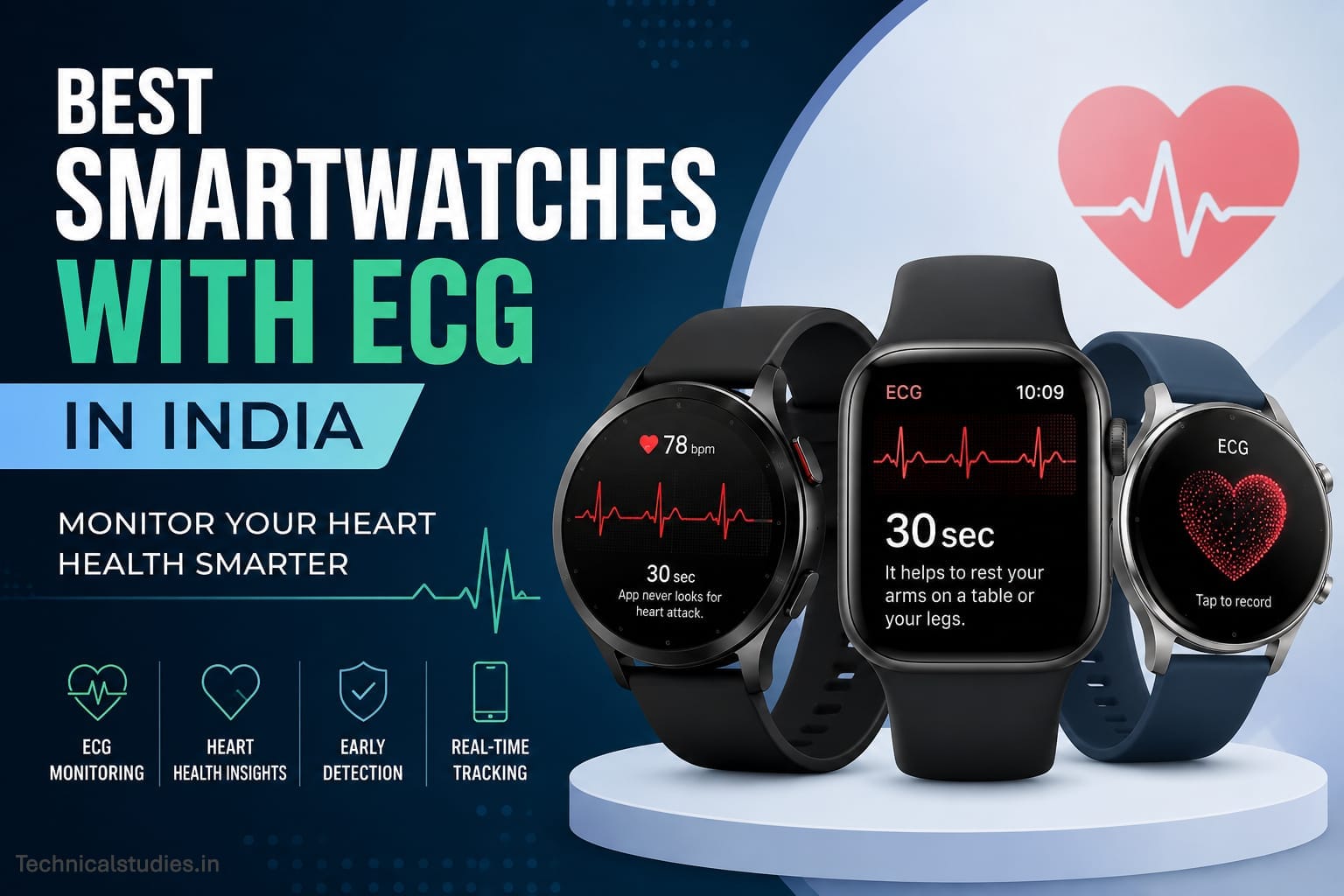
Fitness bands used to be about counting steps. Today, people buy smartwatches for a very different reason: they want a device that tells them something real about their health, not just how active they were.
That shift is exactly why the best smartwatches with ECG in India have become such a popular search and purchase category over the last couple of years.
The real distinction you need to understand is that your regular heart rate sensor (the green light on the back of your watch) counts beats per minute using optical sensors.
An ECG, or electrocardiogram, goes deeper. It records the actual electrical signal your heart generates with every beat, which is what lets it flag irregularities like atrial fibrillation (AFib) that a simple heart rate reading would completely miss.
So who actually needs this feature? If you have a family history of heart conditions, you’re over 40, you’ve noticed unexplained palpitations, or your doctor has already asked you to keep an eye on your heart rhythm, an ECG smartwatch adds real value.
But these watches are screening tools, not diagnostic ones. They’re brilliant at catching something worth mentioning to your doctor. They’re not a substitute for a clinical ECG.
Here I have a list of the best smartwatches with ECG in India that you can buy now. So let’s get started.
What is ECG in a Smartwatch and How Does It Work?
An ECG (electrocardiogram) measures the electrical activity of your heart. This is the tiny voltage changes generated each time your heart muscle contracts and relaxes.
Hospitals do this with multiple electrodes stuck to your chest, arms, and legs. A smartwatch simplifies this into a single-lead reading using just two points of contact.
Most ECG smartwatches have an electrode built into the back of the case (touching your wrist) and a second one embedded in the crown or bezel.
When you place a finger from your other hand on that crown and stay still, you complete an electrical circuit.
The watch’s sensor picks up the tiny signal traveling from one hand, through your heart, to the other and plots it as a waveform.
Once it’s done, you’re not left guessing. The companion app displays your ECG waveform along with a classification, usually “normal sinus rhythm,” “AFib detected,” “inconclusive,” or “heart rate too high/low to analyze.”
Plus your average heart rate during the recording, all saved for you to track over time or share with your doctor.
ECG vs Heart Rate Monitor: What’s the Difference?
They sound similar, but they’re solving different problems. A heart rate monitor tells you how fast your heart is beating; an ECG tells you how well it’s beating. Here is a quick comparison table for better understanding.
| Feature | Heart Rate Monitor | ECG |
|---|---|---|
| Technology | Optical (PPG) – light sensors on the back | Electrical sensors – electrodes on case + crown |
| What it measures | Beats per minute (BPM) | Heart’s electrical rhythm and waveform |
| Checking method | Continuous, automatic, all-day | Manual, on-demand, ~30 seconds |
| Accuracy | Good for BPM trends, less precise during motion | Clinical-grade single-lead accuracy when done correctly |
| Use case | Workouts, sleep tracking, daily activity | Detecting AFib, irregular rhythms, unexplained palpitations |
The reason every ECG-capable watch also has heart rate tracking, but not the other way around, comes down to hardware and purpose.
Optical heart rate sensors are cheap, low-power, and built for continuous background monitoring, so brands include them in even budget bands.
ECG requires dedicated electrodes, additional processing power, and often regulatory clearance, making it a premium, deliberately added feature reserved for watches actually designed for heart health monitoring, not just fitness tracking.
Are Smartwatch ECG Readings Accurate?
For what they’re designed to do, smartwatch ECGs are genuinely reliable, with clear limits worth understanding.
What they’re good at: Detecting AFib, an irregular heart rhythm that’s a major stroke risk factor, is where wrist-based ECG genuinely shines.
Studies on major ECG watches have shown strong agreement with clinical ECGs specifically for identifying AFib versus normal sinus rhythm.
Where they fall short: A hospital ECG uses 12 leads placed across your chest and limbs, giving doctors a complete 360-degree view of your heart’s electrical activity.
Your watch gives you one lead, a single angle. It can catch AFib and some other rhythm irregularities, but it cannot detect a heart attack, blocked arteries, or most structural heart problems the way a 12-lead ECG can.
What affects reading quality: A loose strap, sweaty or dry skin, moving your arm mid-recording, or resting your wrist on a table instead of your lap can all produce an inconclusive result or a noisy waveform.
Why certification matters: Look for FDA clearance or CDSCO approval in India. These mean the ECG algorithm has been clinically validated, not just marketed as a feature.
Things to Check Before Buying an ECG Smartwatch
Real ECG Sensor Support
This is the single biggest trap buyers fall into. Many “ECG” watches on Indian e-commerce sites don’t have a real ECG sensor at all.
They just estimate heart rate variability through the optical sensor and call it “ECG-like monitoring.”
A genuine ECG watch has a physical electrode in the crown or bezel that you touch with your finger to complete the circuit.
If the listing doesn’t mention a 30-second on-demand reading with electrodes, it’s almost certainly not true ECG.
Compatibility With Your Phone
ECG functionality is often locked to specific ecosystems. Apple Watch ECG only works with an iPhone.
It won’t function if you switch to Android. Samsung’s ECG app similarly requires a Samsung phone in many regions.
Before buying, confirm the ECG feature specifically (not just the watch) supports your phone brand, since some watches sync fine for fitness data but restrict ECG to a particular app ecosystem.
Health Features Beyond ECG
A good heart-focused watch bundles ECG with irregular heart rate alerts (background notifications, not just on-demand checks), SpO2 for blood oxygen levels, sleep stage tracking, and stress tracking via heart rate variability.
Together, these give a fuller picture than ECG alone.
Battery Life
ECG sensors, always-on displays, and continuous SpO2 monitoring all drain battery faster.
Premium ECG watches with AMOLED screens often need charging every 1-2 days, while simpler ECG-capable bands can stretch to a week.
Decide how much charging frequency you’re willing to trade for features.
App Experience & Health Reports
Check whether the app stores ECG history long-term, lets you export PDF reports to share with a doctor, and provides trend insights over weeks/months rather than just single readings. This matters far more than most buyers expect.
Here’s the comparison table:
Quick Comparison: Best Smartwatches with ECG in India
| Smartwatch | Compatibility | Display | Battery Life | Standout Feature | Approx. Price |
|---|---|---|---|---|---|
| Samsung Galaxy Watch8 (40mm) | Samsung Android only | 1.34″ Super AMOLED, Sapphire Crystal | ~24 hrs | Vascular Load + Antioxidant Index | ₹20,999+ |
| Apple Watch Series 11 (46mm) | iPhone only | LTPO3 Always-On Retina | Up to 24 hrs (38 hrs low power) | Hypertension notifications, best ECG accuracy | ₹49,900+ |
| Samsung Galaxy Watch7 (44mm) | Samsung Android only | 1.47″ Super AMOLED, Sapphire Crystal | ~24-30 hrs | Same ECG accuracy as Watch8, lower price | ₹16,899+ |
| Fitbit Sense 2 | iOS + Android | 1.58″ AMOLED | 2.5-4 days | Only watch here with continuous stress (cEDA) tracking | ₹22,499+ |
| Withings ScanWatch 2 (42mm) | iOS + Android | Small OLED sub-dial + analog | Up to 30 days | FDA-cleared ECG, hybrid analog design | ₹34,999+ |
| Samsung Galaxy Watch6 Classic (47mm) | Samsung Android only | 1.5″ Super AMOLED, Sapphire Crystal | ~1.5 days (up to 40 hrs rated) | Physical rotating bezel, detailed ECG waveform | ₹16,999+ |
Prices fluctuate with offers and bank discounts. Check current listings before buying.
Best Smartwatches with ECG in India
1. Samsung Galaxy Watch8 (40mm, Bluetooth)
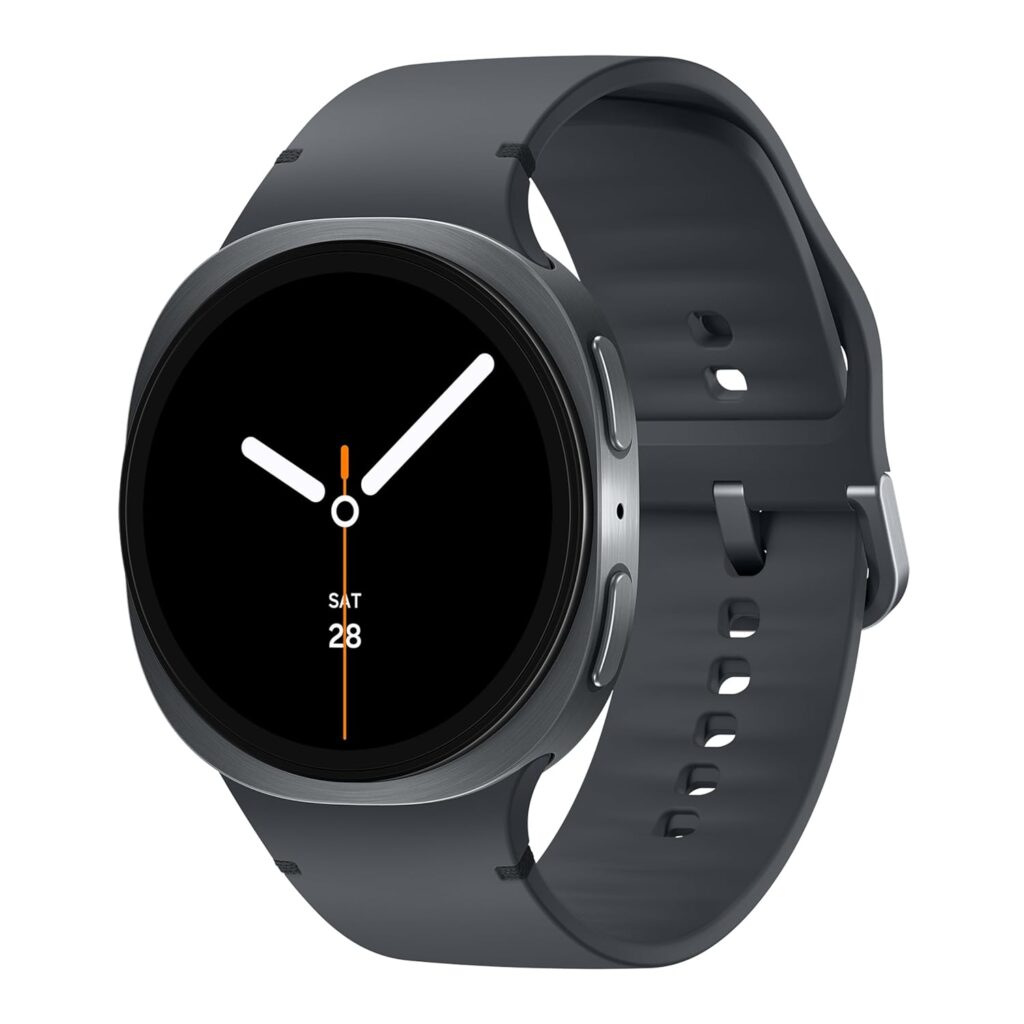
Samsung’s Galaxy Watch8 packs one of the most complete heart-monitoring suites available in this price segment.
The ECG sensor delivers a single-lead reading that detects signs of atrial fibrillation by measuring your heart’s electrical activity and plotting it as a real-time graph, and it’s backed by an Irregular Heart Rhythm Notification feature that quietly analyzes your pulse rate in the background and alerts you if it spots patterns suggestive of AFib.
Beyond ECG, this watch goes further than most rivals. It adds blood pressure tracking (calibrated against a cuff monitor every 28 days), a new Vascular Load metric that monitors cardiovascular strain during sleep, plus an Antioxidant Index and AGEs Index for metabolic health.
Do note, though: these BP and ECG features require the Samsung Health Monitor app, which only runs on Samsung Android phones, and iPhone users are locked out entirely.
On design, the 40mm model uses a 1.34-inch Super AMOLED display protected by Sapphire Crystal, running on Samsung’s 3nm Exynos W1000 chip, with 5ATM plus IP68 water resistance and MIL-STD-810H durability certification.
Battery life is the compromise here. The 325mAh cell barely lasts 24 hours with always-on display and continuous health tracking enabled, so daily charging is non-negotiable.
Who should buy it: Samsung Galaxy phone owners who want the deepest heart-health data available on a Wear OS watch.
Pros: Comprehensive cardiovascular metrics, premium build, bright display
Cons: Samsung phone lock-in, weak battery life, no rotating bezel on the base model
2. Apple Watch Series 11 GPS 46mm
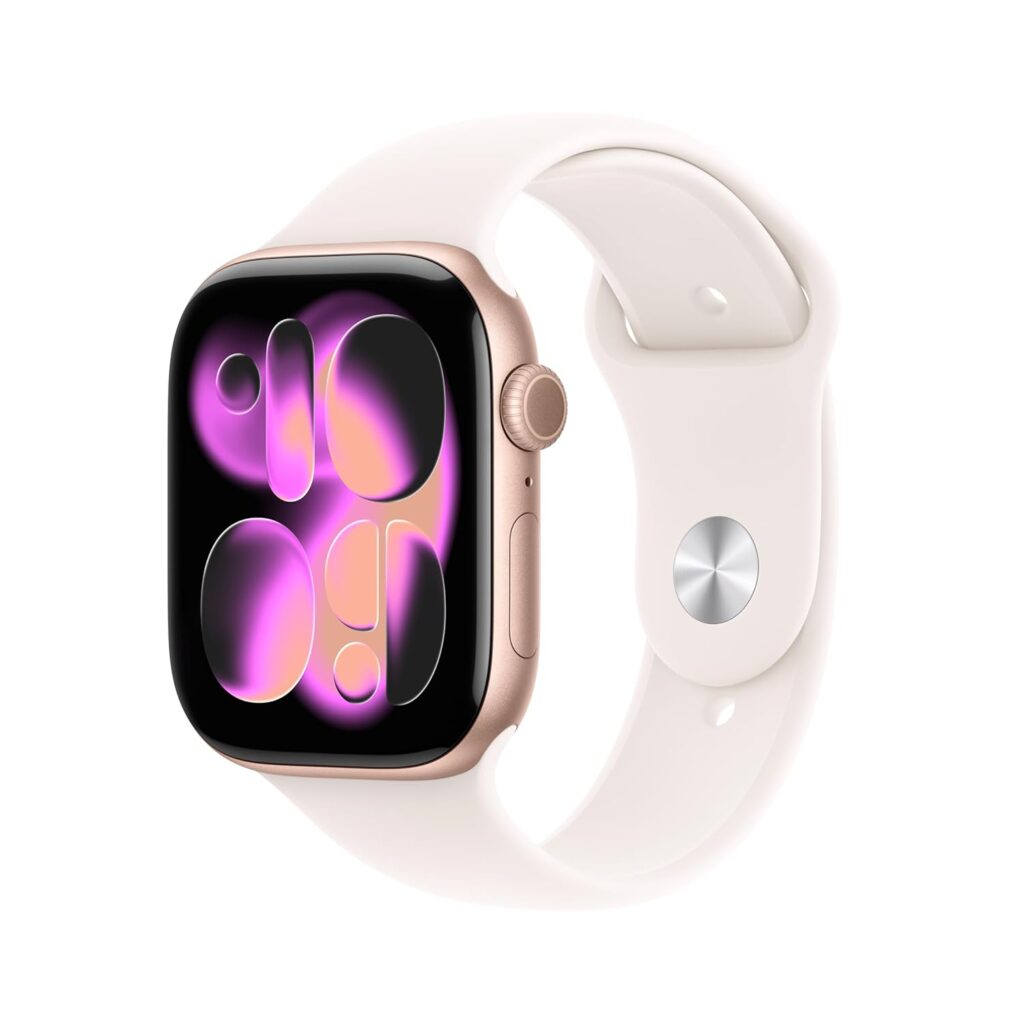
Apple’s ECG app remains the gold standard against which most other smartwatches are judged, and the Series 11 sharpens it further.
It generates a single-lead electrocardiogram in 30 seconds to check for AFib, backed by irregular rhythm notifications that run passively in the background.
New this generation: Hypertension Notifications, which analyze how your blood vessels respond to each heartbeat using the optical sensor, reviewing data over 30-day periods and alerting you to consistent patterns of high blood pressure.
This is a meaningful addition since hypertension often has no symptoms and gets missed in single doctor-visit readings.
Also Check: Best Apple Watch Apps for Travelers [Excellent Choices]
Beyond heart health, the Series 11 covers blood oxygen sensing, precise wrist temperature tracking, sleep apnea notifications, sleep score, and fall/crash detection.
The catch is that ECG and most health features work only when paired with an iPhone, so Android users are shut out entirely.
On design, the 46mm Jet Black model gets a 416×496 LTPO3 Always-On Retina display with a minimum of 1 nit and a maximum of 2,000 nits of brightness, wrapped in aluminum with Apple’s toughest cover glass yet.
Battery life reaches up to 24 hours of normal use, extendable to roughly 38 hours in Low Power Mode, and it fast-charges to 80% in about 30 minutes.
Who should buy it: iPhone users who want Apple’s most clinically trusted ECG and the broadest overall health-tracking ecosystem.
Pros: Best-in-class ECG accuracy and trust, new hypertension alerts, strong all-day battery, excellent display
Cons: iPhone-only, no eSIM-free standalone ECG option, premium pricing
3. Samsung Galaxy Watch 7 (44mm, Green, BT+LTE)
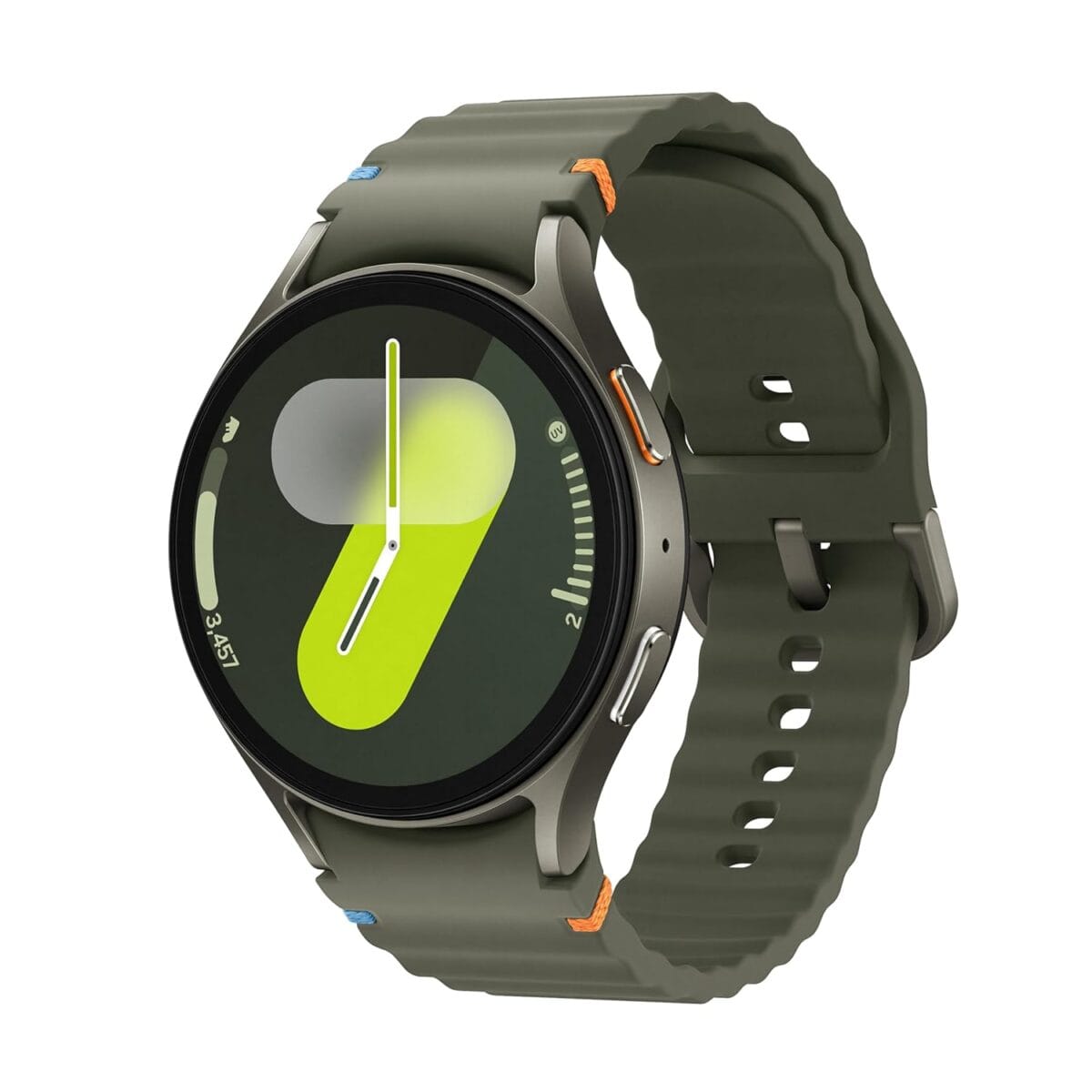
The Galaxy Watch7 brings Samsung’s heart monitoring package down to a more accessible price point without cutting corners on the core ECG experience.
It runs a single-lead ECG that examines your heart rhythm in detail, alongside blood pressure monitoring and continuous SpO2 tracking through Samsung’s Enhanced BioActive Sensor.
The same sensor generation is used in higher-end models. As with every Samsung watch, BP and ECG readings are exclusive to the Samsung Health Monitor app, which only functions on Samsung Galaxy phones, so this is very much a watch built for Samsung’s own ecosystem.
Health tracking extends further with body composition analysis using bioelectrical impedance (just touch your fingertips to the sensor), Galaxy AI-driven Energy Score, personalized heart rate zones, and sleep coaching that needs at least seven days of data, including two off-days, to generate recommendations.
Design-wise, the 44mm model uses a 1.47-inch Super AMOLED display protected by Sapphire Crystal glass, an Armour Aluminum case, and the same 3nm Exynos W1000 processor found in the Watch8, rated 5ATM and IP68 for water resistance.
Real-world battery life is the most-debated aspect. Users report anywhere from 24-30 hours to nearly two days depending on always-on display and LTE usage, with the 425mAh cell needing a genuine daily top-up for heavy users.
Who should buy it: Samsung phone owners who want Watch8-level ECG accuracy without paying flagship prices.
Pros: Reliable ECG and BP readings, sharp AMOLED display, solid build quality, more affordable than Watch8
Cons: Samsung phone lock-in, inconsistent battery life reports, BP needs periodic cuff calibration
4. Fitbit Sense 2 (Shadow Grey/Graphite Aluminium)
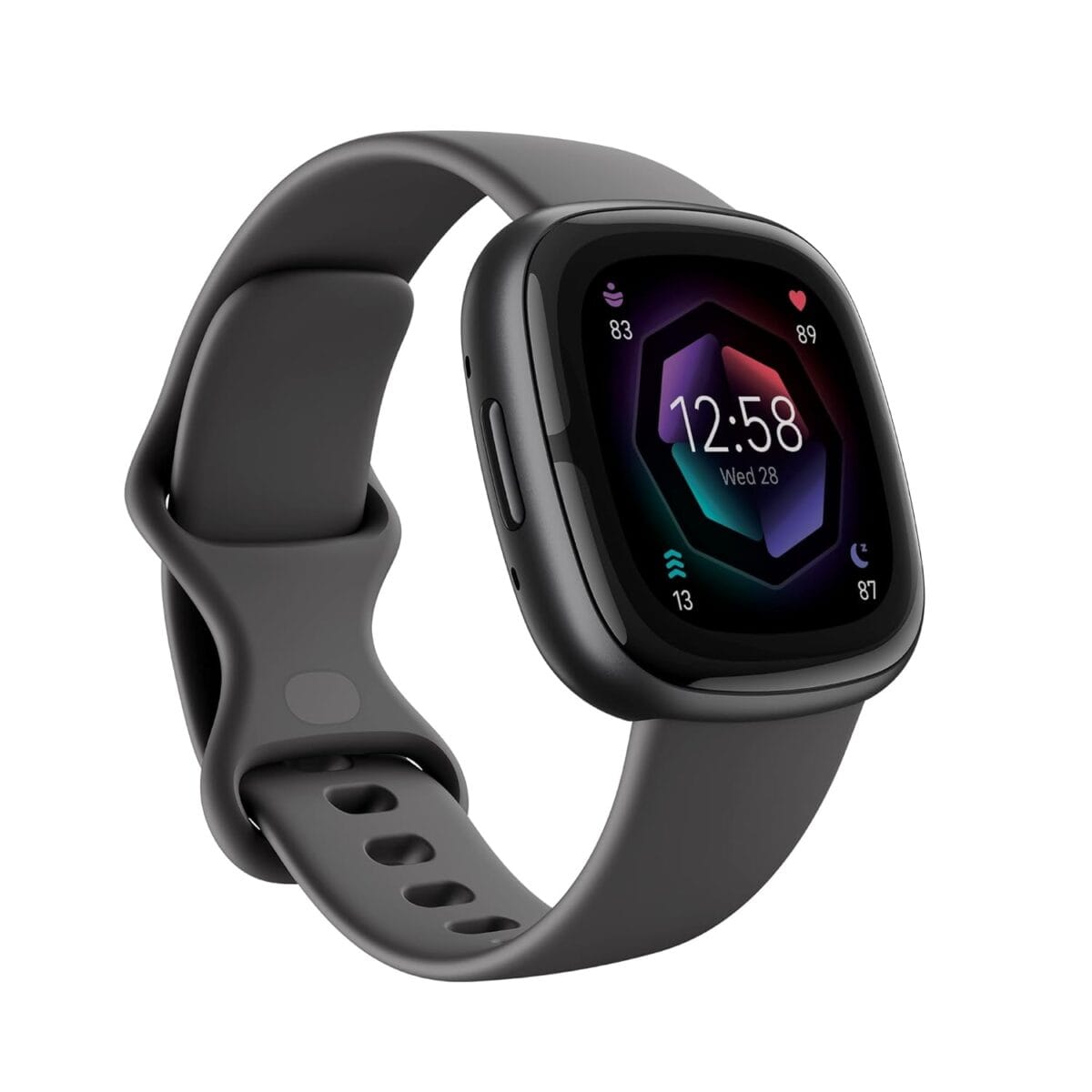
The Sense 2 is Fitbit’s flagship health watch, and its standout heart-health feature is actually twofold: an on-demand ECG app for atrial fibrillation assessment, plus a continuous EDA (cEDA) sensor that passively tracks your body’s stress response all day.
The ECG uses the same multipurpose electrical sensors as its heart rate monitor, and pairs with irregular heart rhythm notifications that work even while you’re asleep or sitting still.
Beyond ECG, you get 24/7 heart rate tracking, SpO2, skin temperature variation, Daily Readiness Score, and Cardio Fitness (VO2 Max).
This is a genuinely deep health dataset, especially with the included Premium membership unlocking guided workouts and detailed stress score breakdowns.
Design-wise, it’s a 1.58-inch AMOLED display in a lightweight aluminum case, rated 5ATM for swim-proofing.
Real-world testing shows battery lasting closer to 2.5-4 days with always-on display enabled, rather than the claimed 6 days, still comfortably ahead of most AMOLED smartwatches, and a full charge takes just 2 hours.
Who should buy it: Anyone who wants ECG plus genuine stress-tracking, and needs iOS/Android flexibility Apple and Samsung don’t offer.
Pros: Cross-platform (iOS + Android), unique continuous stress tracking, strong battery life, on-wrist calling
Cons: ECG regional availability varies, no third-party app store, proprietary USB-A charger
5. Withings ScanWatch 2 (42mm, Black/White)
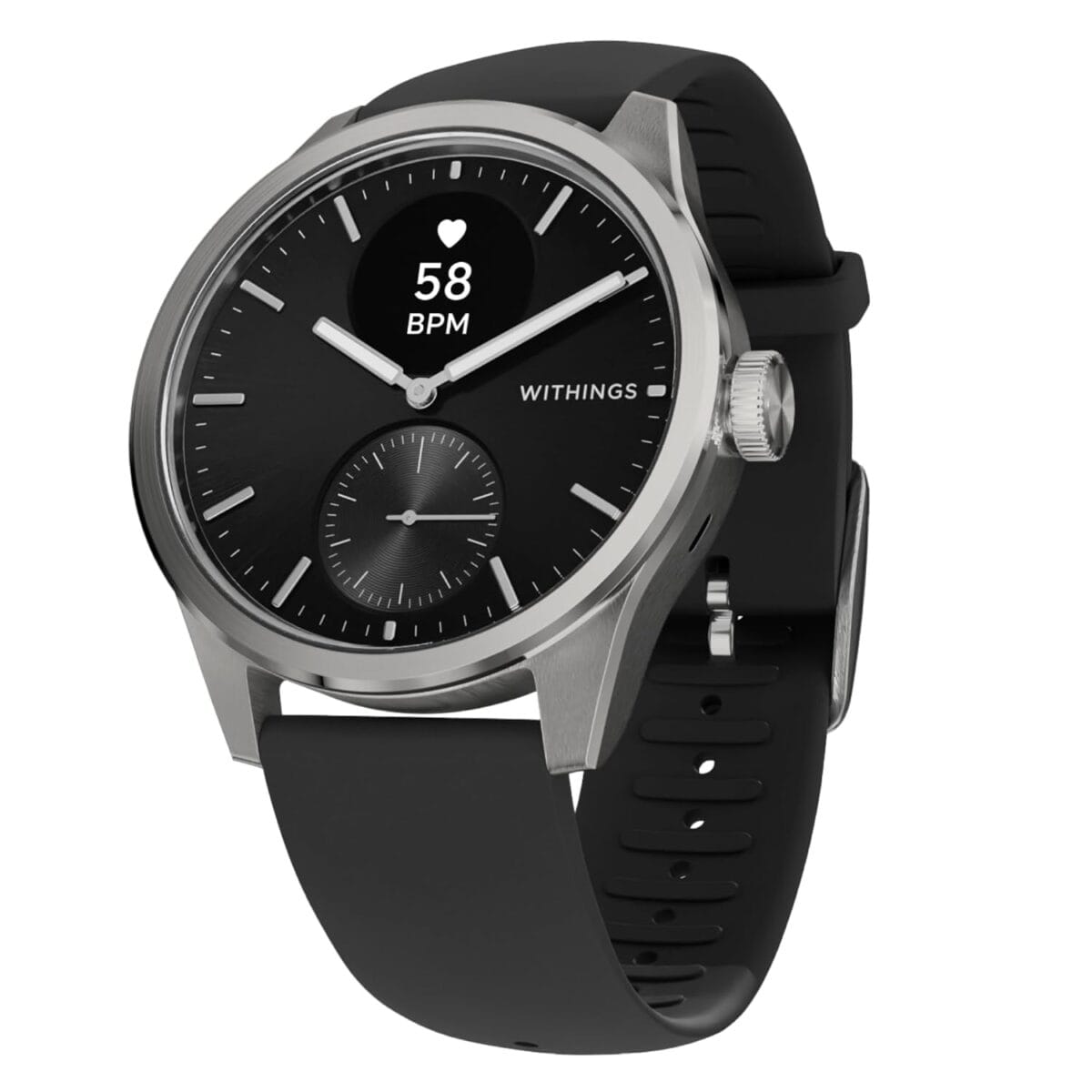
The ScanWatch 2 flips the usual smartwatch formula on its head. It looks like a classic analog watch, with a small sub-dial for activity progress, yet hides genuine medical-grade sensors underneath.
Its clinically validated ECG detects atrial fibrillation by recording a 1-lead electrocardiogram.
You take it by placing two fingers on sensors at the edge of the dial, and it’s FDA-cleared in the US and CE-marked in Europe, backing up its accuracy claims with real regulatory approval rather than marketing language.
It also adds passive Irregular Rhythm Notifications so AFib signs can surface without you manually testing.
What sets it apart from typical ECG smartwatches is the TempTech24/7 module, tracking body temperature variation day and night to flag early signs of illness, alongside a medical-grade SpO2 sensor, breathing disturbance detection during sleep, and temperature-based cycle tracking for women.
It’s genuinely one of the more clinically serious wearables in this list.
Design-wise, the 42mm stainless steel case with sapphire glass and a tiny OLED sub-display keeps it looking like a traditional timepiece rather than a screen on your wrist.
The standout, though, is battery life, which is rated up to 30 days on a single charge (35 in some regions), recharging fully in about 2 hours, a massive gap over AMOLED rivals that need daily charging.
Who should buy it: Anyone who wants clinical-grade ECG and temperature tracking without the look or charging hassle of a typical smartwatch.
Pros: FDA-cleared ECG, exceptional 30-day battery, classic analog design, cross-platform (iOS + Android)
Cons: Small OLED sub-display limits on-watch detail, no app ecosystem
6. Samsung Galaxy Watch6 Classic (Black/Silver, 47mm, LTE)
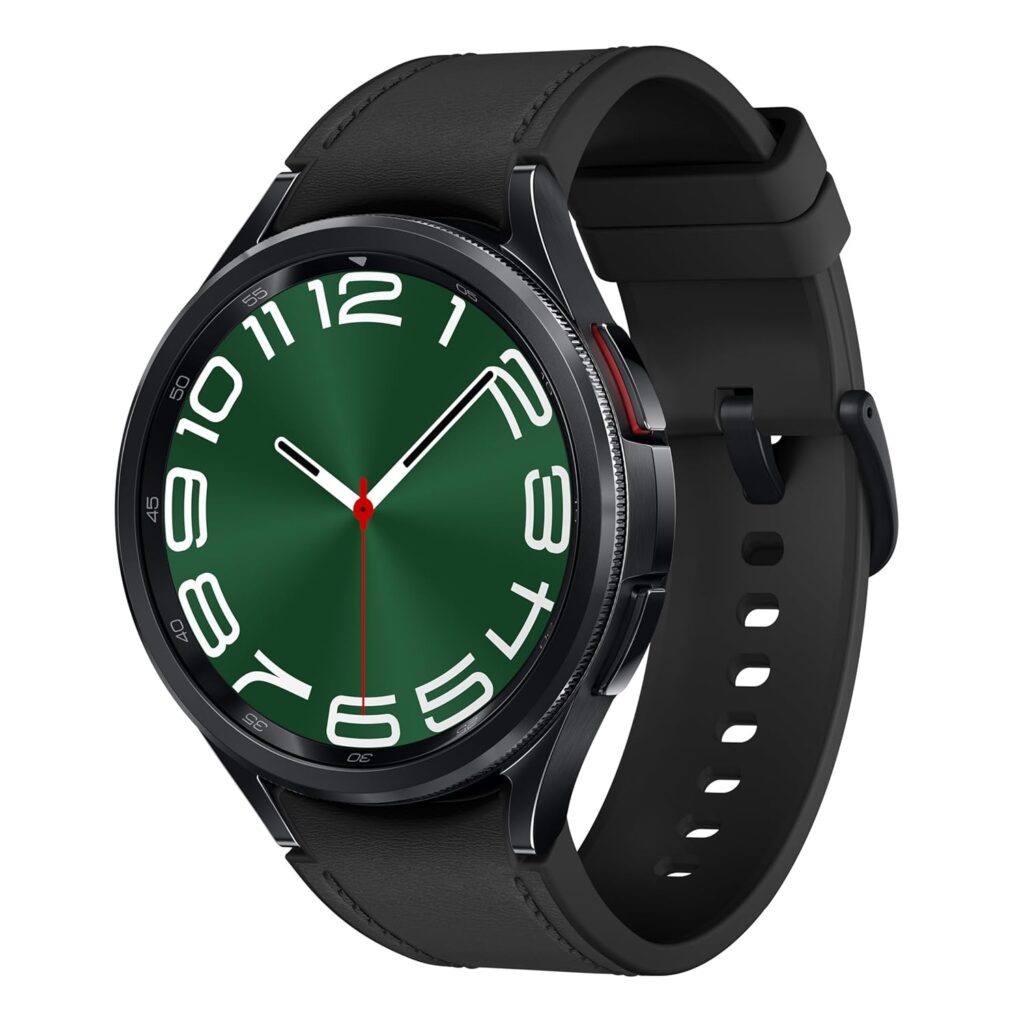
The Watch6 Classic brings back Samsung’s beloved physical rotating bezel, which is genuinely useful for navigating menus without smudging the screen, while packing the same core heart-monitoring package found in newer Galaxy watches.
Its PPG sensor continuously monitors your heart rate and rhythm in the background, sends alerts for abnormally high or low readings, and prompts you to take a proper ECG the moment it detects something irregular.
The ECG itself takes roughly 26-31 seconds and displays a live-moving waveform graph alongside your BPM, giving you more visual feedback during the reading than most rivals show.
It also includes blood pressure tracking (calibrated every 4 weeks against a cuff monitor) and Bioelectrical Impedance Analysis for body composition.
As with all Galaxy Watches, ECG and BP require a Samsung Galaxy phone running Android 7.0 or above; non-Samsung Android and iPhone users cannot access these features.
On design, the 47mm case houses a 1.5-inch Super AMOLED display protected by sapphire crystal, wrapped in a stainless steel body with genuine mechanical bezel rotation – Samsung’s most premium-feeling build in this lineup.
The 425mAh battery is rated for up to 40 hours with fast charging support, though real-world use with LTE and always-on display active tends to land closer to a day and a half.
Who should buy it: Samsung phone owners who want a traditional watch look with a functional rotating bezel, at a lower price than the Watch8.
Pros: Satisfying rotating bezel, detailed ECG waveform display, premium stainless steel build, now heavily discounted
Cons: Samsung phone lock-in, older Exynos W930 chip, heavier than newer models
Best ECG Smartwatch for iPhone vs Android Users
Your phone brand decides more than half this decision, since ECG apps are largely locked to specific ecosystems.
Best for iPhone users: The Apple Watch Series 11 – its ECG app only works with an iPhone, but it’s the most clinically trusted option available, now backed by hypertension notifications too.
Best for Samsung users: The Galaxy Watch8 or Watch7 – deepest heart-health suite on Android, but ECG and BP work exclusively with Samsung phones.
Best cross-platform option: The Fitbit Sense 2 – the only ECG watch here that works equally well with both iPhone and Android, ideal if you switch phone brands often.
Should You Buy Cheap Smartwatches Claiming ECG Support?
Many budget watches under ₹5,000 list “ECG” as a headline feature, but often what’s inside is a basic optical sensor estimating heart rate variability, not a real electrode-based ECG.
Even where genuine electrodes exist, cheaper hardware and unvalidated algorithms mean noisier waveforms and more inconclusive readings.
The real gap is certification: brands like Apple, Samsung, and Withings have clinically validated their ECG algorithms against actual cardiac data and secured FDA or CDSCO clearance.
Most budget watches skip this entirely. Without it, you’re getting a rough estimate, which is fine for curiosity and risky if you’re actually monitoring a heart condition.
Who Should Consider Buying an ECG Smartwatch?
Fitness enthusiasts who already track workouts benefit from adding heart rhythm data to their existing metrics.
Older users, especially those over 40 or with a family history of heart issues, get real early-warning value from AFib detection.
Health-curious buyers who like understanding trends in their own body will appreciate the deeper data layer.
Existing Apple or Samsung users get the smoothest experience, since ECG integrates directly into apps they already use.
Who probably doesn’t need one: healthy users under 30 with no cardiac risk factors, who’d get more practical value from a basic fitness tracker instead.
Is an ECG Smartwatch Worth Buying?
If you already own a regular smartwatch: Only upgrade if heart monitoring genuinely matters to you. ECG alone rarely justifies replacing a working device.
If this is your first premium smartwatch: Worth it. You get fitness tracking plus a meaningful health safety net in one purchase.
If you only need fitness tracking: Skip ECG models and save money with a basic fitness band or watch instead.
If you want advanced health features: Absolutely worth it. Between ECG, SpO2, and irregular rhythm alerts, you’re getting genuine diagnostic-adjacent value most fitness watches can’t offer.
Frequently Asked Questions
Can a smartwatch ECG detect a heart attack?
No. Smartwatch ECGs only detect signs of atrial fibrillation and irregular rhythm. They cannot identify heart attacks, blocked arteries, or other cardiac conditions requiring clinical diagnosis.
Which smartwatch has the most accurate ECG?
Apple Watch remains the benchmark, with clinical validation showing 98.3% sensitivity for AFib detection. Withings ScanWatch 2 and Samsung Galaxy Watch also use clinically validated algorithms.
Does Apple Watch ECG work in India?
Yes. Apple officially enabled the ECG app and irregular rhythm notifications in India in 2019, and it continues to work with a compatible iPhone and updated watchOS.
Does Samsung Watch ECG work in India?
Yes, Samsung’s ECG feature works in India, but only through the Samsung Health Monitor app, which requires a Samsung Galaxy smartphone. It won’t function with other Android phones.
Can ECG smartwatches detect heart problems?
They can flag irregular rhythms like AFib worth discussing with a doctor, but they’re screening tools, not diagnostic devices, so always confirm concerning results with a clinical ECG.
Do budget smartwatches have real ECG?
Rarely. Most budget watches under ₹5,000 use optical sensors mimicking ECG-like data rather than true electrode-based hardware, and lack clinical validation or regulatory certification.
Can I share smartwatch ECG reports with my doctor?
Yes. Apple, Samsung, and Withings all let you export ECG readings as PDF reports from their companion apps, making it easy to share directly with your physician.
Final Verdict
If heart health is your priority, skip the budget “ECG-style” watches. The accuracy gap is real, and this isn’t where you want guesswork.
For iPhone users, the Apple Watch Series 11 remains the gold standard for validated ECG accuracy.
Samsung loyalists get the deepest health suite with the Galaxy Watch8, while the Watch7 offers similar reliability at a lower price. Want a device that works regardless of phone brand?
The Fitbit Sense 2 is your best bet. And if all-day battery matters more than a bright screen, the Withings ScanWatch 2’s 30-day life is hard to beat.
Ready to choose? Match your phone ecosystem first, then pick based on the features above. Your heart will thank you.
Related Articles
Best AMOLED Smartwatches Under ₹10000 in India (Top Picks)
Best Smartwatches For Women In India [Women-Specific]
Best Smartwatches For Athletes In India (Top Choices)
Best Smartwatches For Heavy Workouts In India

Kanha is a electronics engineer, tech enthusiast, and writer at technicalstudies.in. His experience in tech, coupled with excellent writing skills, makes the text easy to understand and helps the reader make the correct decision. Outside of writing, Kanha is passionate about exploring new gadgets and gaming.