
Last updated on June 22nd, 2026 at 11:38 am
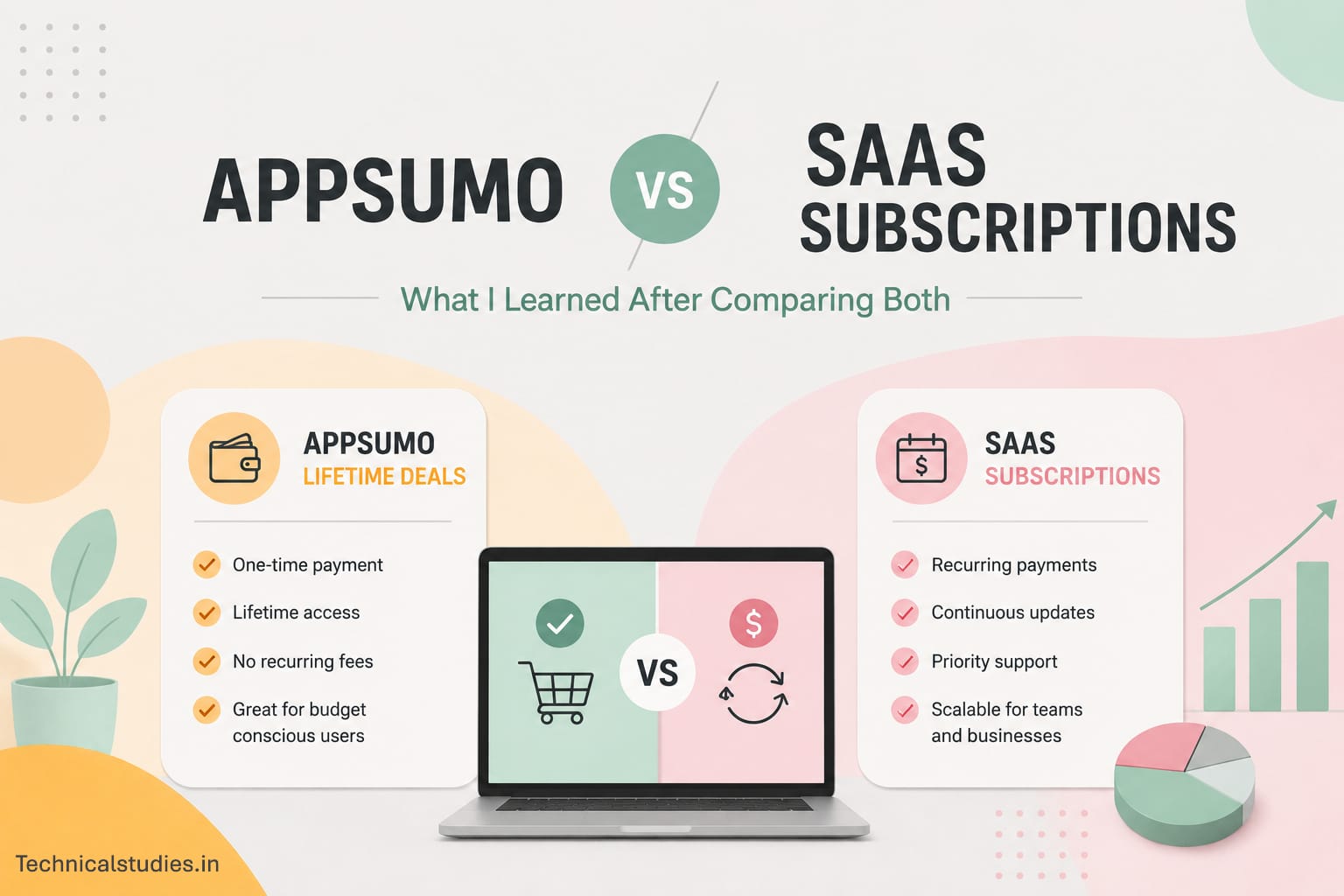
Comparing AppSumo lifetime deals vs SaaS subscriptions? Discover real cost comparisons, key differences, hidden risks, and a hybrid strategy to build a smarter, more affordable software stack.
Your software stack is quietly bleeding your budget. Between project management tools, email marketing platforms, design software, and communication apps, the average small business owner spends hundreds of dollars every single month, just to keep the lights on digitally.
That’s why so many freelancers, creators, and startups are ditching the subscription treadmill and turning to lifetime deals instead. Pay once, use forever. It sounds almost too good to be true.
Enter AppSumo, the marketplace that built its entire reputation on connecting early-stage SaaS tools with buyers who want one-time payment software at a fraction of the regular price.
It’s been around since 2010 and has saved its community over a billion dollars in software costs.
But here’s the real question: Are lifetime deals actually smarter than subscriptions, or are they just a tempting shortcut with hidden trade-offs?
In this comparison, I’ll break down exactly how both models work, where each one wins, and which makes more sense depending on your situation.
Short answer? It depends, but after digging deep into both, I have a pretty clear opinion. Let’s get into it.
What Are AppSumo Lifetime Deals?
How AppSumo Works
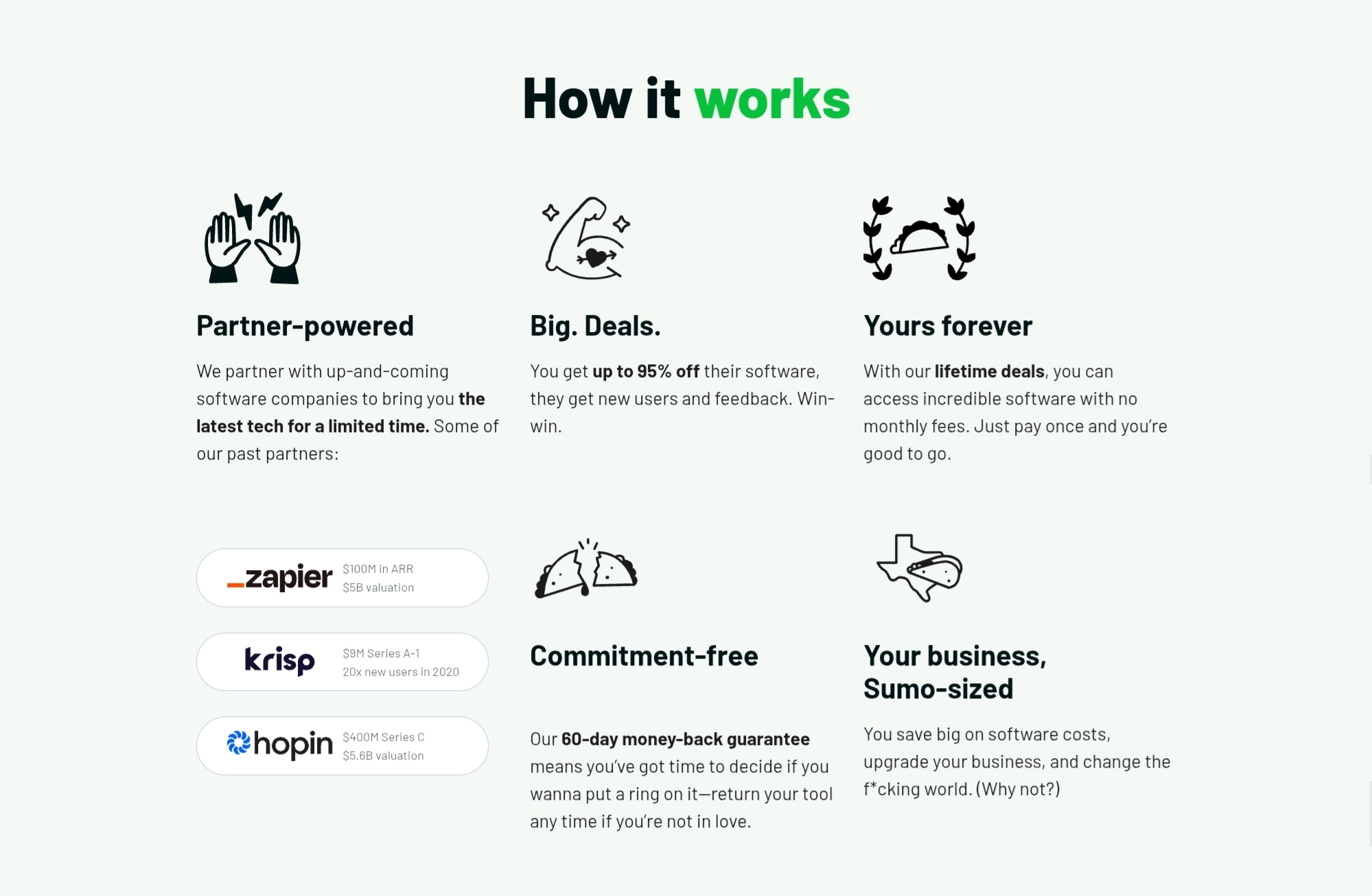
AppSumo partners with SaaS companies, mostly early-stage or growth-phase products, and lists them at a steep one-time price.
You pay once, and you get lifetime access to that software. No monthly bills, no renewal reminders, no price hikes.
Most deals are structured in tiers. Tier 1 might get you basic features with limited usage, while Tier 2 or 3 unlocks higher limits and advanced functionality.
So before clicking “buy,” you need to match the tier to your actual needs; not just grab the cheapest option and hope it covers everything.
Some deals that became fan favorites on AppSumo include tools like TidyCal, SendFox, WriteCream, Sociamonials, etc.
My How AppSumo Works guide will give you a better understanding of it.
Why Software Companies Offer Lifetime Deals
If lifetime deals seem like a bad deal for the software company, think again. There’s a very strategic reason they do it.
For early-stage startups, customer acquisition is expensive. Running ads, hiring sales teams, and competing against established players costs serious money.
AppSumo hands them a ready audience of thousands of buyers who are actively looking for new tools.
Beyond acquisition, lifetime deals serve as real-world product validation. Selling to a few hundred paying customers tells you far more than any beta test. You get feedback, bug reports, and feature requests fast.
There’s also the cash injection factor. A successful AppSumo launch can bring in tens of thousands of dollars upfront, giving a bootstrapped startup the runway to keep building.
In short, it’s a growth trade-off. They sacrifice long-term subscription revenue in exchange for early traction, visibility, and capital.
What Are Traditional SaaS Subscriptions?
How SaaS Subscription Pricing Works
Most software you use today runs on a subscription model, and it comes in a few different flavors.
Monthly plans are the most flexible: you pay as you go and can cancel anytime. But that convenience comes at a cost, since monthly rates are almost always higher than committing annually.
Annual plans bring the price down, usually by 20–40%, in exchange for a 12-month commitment upfront. It’s a fair trade if you’re confident the tool fits your workflow.
Then there’s usage-based pricing, where your bill scales with how much you actually use the product, for instance, API calls, emails sent, or contacts stored. It sounds fair until you have a big month and the invoice surprises you.
Seat-based pricing charges per user on your team. Fine when you’re solo or a small team, but it scales up quickly as you grow. Adding three new hires can suddenly double your software bill overnight.
Why SaaS Companies Prefer Subscriptions
From a business perspective, subscriptions are close to perfect. Recurring revenue means predictable income every month, which makes it easier to plan hiring, infrastructure, and product development.
That steady cash flow is also what funds the continuous improvements you see in mature SaaS products, including new features, better UI, security updates, and integrations. The product keeps getting better because the revenue keeps coming in.
Subscriptions also help companies forecast customer support costs more accurately. Knowing roughly how many active users they have at any given time means they can staff support teams accordingly.
Simply put, subscriptions are built to keep companies financially healthy long-term, which is great for them, but it does mean you keep paying indefinitely, whether the tool evolves or not.
AppSumo Lifetime Deals vs SaaS Subscriptions: Key Differences
Upfront Cost
This is where lifetime deals win immediately and obviously. A typical AppSumo deal costs between $49 and $299 one-time, depending on the tier.
The equivalent SaaS subscription might run $30–$100 per month. You’re essentially paying a few months’ worth of fees and walking away with permanent access. For budget-conscious freelancers and startups, that upfront saving is hard to ignore.
Long-Term Cost
Flip the calendar forward 12, 24, or 36 months, and the math gets even more interesting. A $99 lifetime deal on a tool you’d otherwise pay $29/month for pays itself off in under four months. Every month after that is pure savings.
Subscriptions, on the other hand, never stop. Subscription fatigue is real, and it creeps up on you when you’re paying for six tools simultaneously without noticing.
Features and Limitations
Here’s where lifetime deals start showing their cracks. Most AppSumo deals are capped at the feature set available at launch, or locked to specific tier limits. You might be restricted on the number of users, projects, emails, or API calls.
Subscription users, especially on higher plans, typically get access to the full and evolving feature set without arbitrary ceilings.
Product Stability
Established SaaS products like Notion, HubSpot, or Mailchimp have proven staying power. They have investor backing, large teams, and thousands of paying customers keeping them alive.
Many AppSumo products, however, are early-stage startups. Some grow into excellent tools. Others shut down within a year or two. Product stability is a genuine risk you take with every lifetime deal purchase.
Updates and Improvements
Subscription users almost always get continuous updates as part of what they pay for. It’s built into the model.
With lifetime deals, the update situation is murkier. Some AppSumo sellers are generous and keep lifetime customers on par with paying subscribers.
Some quietly deprioritize them once the deal window closes. Before buying, it’s worth checking the product’s roadmap and the seller’s response history in the AppSumo comments section.
Customer Support
Subscription customers, especially on paid tiers, typically receive priority support including live chat, dedicated onboarding, and faster response times.
With lifetime deals, support quality varies widely. Some founders are incredibly responsive to their AppSumo community. Others become harder to reach once the deal ends. It’s not a rule, but it’s a pattern worth being aware of.
Scalability
If your business grows fast, subscriptions scale with you more cleanly. You upgrade your plan, add seats, and unlock more capacity.
With lifetime deals, scaling often means buying additional codes or upgrading tiers, which can get complicated and sometimes cost more than expected.
For solopreneurs and small teams, this isn’t usually a problem. For growing businesses, it can become a limitation.
Risk Level
Subscriptions carry low risk; you can cancel anytime and stop paying. Lifetime deals carry higher risk because your money is tied to the survival of that product.
If the company shuts down, pivots, or removes the lifetime tier, you lose access. AppSumo does offer a 60-day refund window, which helps, but after that your investment is locked in.
Comparison Table
| Factor | AppSumo Lifetime Deal | SaaS Subscription |
|---|---|---|
| Upfront Cost | Low (one-time $49–$299) | Low to medium (monthly) |
| Long-Term Cost | Very low | Ongoing and cumulative |
| Features | Capped or tier-limited | Full and evolving |
| Product Stability | Variable (early-stage risk) | Generally high |
| Updates | Inconsistent | Regular and guaranteed |
| Customer Support | Varies by seller | Structured and reliable |
| Scalability | Limited by tiers | Flexible and seamless |
| Risk Level | Medium to high | Low |
My Cost Comparison: Which Option Saves More Money?
Numbers don’t lie. Let’s stop talking theory and actually run the math across three real-world scenarios.
Scenario 1: A Freelancer Using One Tool for Three Years
Let’s take a simple, common example — a project management or scheduling tool.
- AppSumo Lifetime Deal: $59 (one-time)
- SaaS Subscription: $19/month
| Timeframe | Lifetime Deal Cost | Subscription Cost | You Save |
|---|---|---|---|
| 6 months | $59 | $114 | $55 |
| 1 year | $59 | $228 | $169 |
| 2 years | $59 | $456 | $397 |
| 3 years | $59 | $684 | $625 |
By year three, you’ve saved over 10x your original investment. For a freelancer watching every rupee or dollar, that’s not a small deal; that’s a meaningful chunk of money that stays in your pocket.
Related: Best AppSumo Deals Under $100 for Bloggers, Marketers & Creators
Scenario 2: A Content Creator Using Multiple SaaS Tools
This is where subscription fatigue really hits. Content creators typically run on a stack of four to five tools simultaneously. Here’s how the numbers compare using real, popular tools available on AppSumo vs their standard subscription pricing:
| Tool Category | Example Tool | AppSumo LTD (one-time) | Subscription (monthly) | Subscription (annual) |
|---|---|---|---|---|
| Email Marketing | Sender / MailerLite | ~$69 | $19–$39/mo | $228–$468/yr |
| SEO Tools | Mangools / Ubersuggest | ~$99 | $29–$49/mo | $348–$588/yr |
| AI Writing | Writesonic / Longshot | ~$79 | $19–$49/mo | $228–$588/yr |
| Social Media | Publer / Radaar | ~$59 | $12–$29/mo | $144–$348/yr |
| Total | ~$306 one-time | $79–$166/mo | $948–$1,992/yr |
A content creator paying subscriptions across all four categories could spend anywhere between $948 and $1,992 every single year. The lifetime deal equivalent? A one-time investment of roughly $306 (varies depending on the deal).
Even if two of those tools eventually shut down and need replacing, you’re still saving significantly over a three-year window.
Related: 75+ Best AppSumo Lifetime Deals for Marketers [Top Software Picks by Category]
Scenario 3: A Startup or Agency
Here’s where the honest answer kicks in. Subscriptions are sometimes the smarter choice, and startups or agencies are the clearest example of when.
Consider an agency running a client-facing CRM or a white-label reporting tool. As the team grows from 3 people to 15, seat-based subscription pricing scales with you automatically.
The product is mature, the support is reliable, and enterprise-grade features, SSO, role-based permissions, and audit logs are only available on subscription tiers.
AppSumo lifetime deals, by contrast, are typically built for solopreneurs and small teams. The seat limits, usage caps, and feature restrictions quickly become a bottleneck for a scaling agency.
For a startup that needs stability, integrations, and predictable onboarding for new team members, paying $200–$500/month for a proven SaaS tool is a reasonable business expense, not a waste.
The rule of thumb: If the tool is mission-critical and client-facing, lean toward a reputable subscription. If it’s an internal productivity tool or something you’re testing, a lifetime deal is a smart low-risk bet.
Related: Best AppSumo Lifetime Deals I Actually Recommend
The Biggest Advantages of AppSumo Lifetime Deals
Lower Long-Term Costs
As the numbers in the previous section proved, lifetime deals almost always win on total cost over time. One smart purchase today can save you hundreds, sometimes thousands, of dollars over a few years.
No Recurring Monthly Bills
There’s a quiet peace of mind that comes with owning your software. No auto-renewals catching you off guard, no price hike emails, and no guilt about underusing a tool you’re still paying for.
Great for Solopreneurs and Freelancers
When you’re a team of one, you don’t need enterprise-grade scalability. You need affordable, functional tools that get the job done. AppSumo is practically built for this audience.
Access to New and Innovative Tools
AppSumo regularly features tools that haven’t hit mainstream awareness yet. Early adopters often get the best pricing and the competitive advantage of using software their competitors haven’t discovered.
Easier Software Experimentation
With subscriptions, trying a new tool feels like a commitment. With a low one-time payment, experimenting becomes almost risk-free. If it works, great. If it doesn’t, you’ve lost $49, not a monthly bill that quietly drags on.
Read Also: Best Appsumo Deals For Startups Every Founder Should Consider
The Biggest Drawbacks of AppSumo Lifetime Deals
Some Tools May Shut Down
Early-stage products carry real risk. Some AppSumo tools disappear within 12–18 months, leaving you without a refund and without software.
Feature Development Can Be Slower
Once a company closes their AppSumo deal, lifetime users often get deprioritized. Paying subscribers get new features first, or exclusively.
Running modern AI features costs software companies money every single time you use them. Because of this, some founders will launch a brilliant new AI feature later on but lock it behind a monthly subscription, meaning your lifetime deal only covers the basic, original software.
Limited Integrations
Many AppSumo tools are still building their integration ecosystem. If you rely heavily on Zapier, native CRM connections, or API access, verify compatibility before buying.
Support Quality Can Vary
Some founders are remarkably responsive. Others vanish after the deal window closes. Always check the Q&A section on the deal page before purchasing.
The Biggest Advantages of SaaS Subscriptions
More Mature Products
Established SaaS tools have years of user feedback baked into their product. The rough edges are smoothed out, the workflows are intuitive, and the reliability is something you can actually build a business on.
Faster Feature Releases
Recurring revenue funds continuous development. Subscription-based products ship updates, improvements, and new features far more consistently than tools still figuring out their business model.
Better Customer Support
Paid subscribers, especially on mid to higher tiers, get access to live chat, dedicated onboarding, knowledge bases, and faster response times. When something breaks at a critical moment, that support infrastructure genuinely matters.
Higher Reliability
Mature SaaS companies invest heavily in uptime, security, compliance, and infrastructure. For client-facing work or mission-critical operations, that reliability is worth paying for.
Better Team Collaboration Features
Subscriptions are built with teams in mind. Role-based permissions, shared workspaces, activity logs, and administrative controls come standard on most plans. These aren’t luxuries; they’re necessities once you’re managing work across multiple people.
Simply put, subscriptions deliver consistency and peace of mind that early-stage lifetime deal products often can’t match yet.
The Biggest Drawbacks of SaaS Subscriptions
Rising Monthly Costs
SaaS companies raise prices; it’s practically guaranteed. What starts at $19/month quietly becomes $35/month after a pricing restructure, and existing customers rarely get spared.
Subscription Fatigue
Five tools at $20/month each don’t sound bad until you’re staring at a $1,200 annual software bill and wondering where it all went.
Paying for Features You Rarely Use
Most subscription plans bundle features to justify higher tiers. You end up paying for capabilities you never open just to access the one or two you actually need.
Vendor Lock-In
The longer you use a subscription tool, the more your data, workflows, and team habits get tied to it. Switching becomes painful, which is exactly what these companies count on.
Budget Uncertainty
Usage-based and seat-based pricing makes monthly bills unpredictable. For freelancers and small teams managing tight budgets, that inconsistency creates unnecessary financial stress.
When AppSumo Lifetime Deals Make the Most Sense
If you fall into any of these categories, lifetime deals should absolutely be on your radar.
Freelancers save big on invoicing, client portals, and scheduling tools.
Bloggers benefit from one-time deals on SEO, keyword research, and content planning tools.
Content creators can build their entire toolkit – social scheduling, graphics, and video tools – without a single monthly bill.
Solopreneurs running lean operations get the most value since they rarely hit usage ceilings.
Small businesses can cut significant overhead on internal productivity and communication tools.
Side hustlers especially benefit because low upfront costs mean low risk on a limited budget.
Tool categories where lifetime deals consistently deliver great value:
- Email marketing platforms
- SEO and keyword tools
- AI writing assistants
- Landing page builders
- Appointment scheduling tools
When SaaS Subscriptions Are the Better Choice
Sometimes paying monthly is simply the smarter decision.
Agencies managing clients need reliable, white-label tools with consistent uptime; a tool shutting down mid-project isn’t an option.
Large teams require proper seat management, admin controls, and collaborative workflows that most lifetime deals can’t support at scale.
Enterprise users need compliance, security certifications, and SLAs that only established subscription products provide.
Mission-critical operations like payment processing, customer support systems, or core CRMs demand the kind of reliability and dedicated support that subscriptions are built to deliver.
Fast-growing companies need tools that scale seamlessly without hitting artificial usage ceilings.
Examples where reliability outweighs savings:
- CRM platforms like HubSpot or Salesforce
- Cybersecurity and compliance tools
- Cloud infrastructure and hosting
- Team communication platforms like Slack
A Hybrid Strategy: The Approach I Recommend
The smartest move isn’t choosing one model over the other; it’s knowing when to use each.
After testing both extensively, here’s the framework I personally follow:
Buy lifetime deals for tools that are:
- Supplementary but valuable — SEO and keyword research tools
- Creatively driven — design and graphic tools
- Experimental and evolving — AI writing and productivity tools
- Individually operated — social media schedulers and automation tools
Stick to subscriptions for:
- Your core CRM — client relationships can’t afford downtime
- Email marketing platforms — deliverability and compliance matter too much
- Team collaboration software — consistency across your team is non-negotiable
- Anything mission-critical — if losing access for 24 hours would hurt your business, pay the subscription
Think of lifetime deals as smart opportunistic purchases and subscriptions as your reliable business infrastructure. Build your stack with both in mind.
Frequently Asked Questions
Are AppSumo lifetime deals really lifetime?
Yes, as long as the company stays operational. You pay once and keep access indefinitely. However, if the company shuts down, that lifetime access ends with it.
Can AppSumo tools replace premium SaaS products?
Sometimes, but not always. For basic to mid-level needs, many AppSumo tools genuinely compete. For enterprise-grade features and reliability, established SaaS products still hold the edge.
Is AppSumo worth it for freelancers?
Absolutely. Freelancers have the most to gain because low usage requirements, tight budgets, and solo workflows make lifetime deals an almost perfect fit for independent professionals.
What happens if an AppSumo company shuts down?
You lose access permanently. AppSumo’s 60-day refund window helps, but beyond that there’s no compensation. Always research product stability before purchasing.
How much money can AppSumo save?
Significantly. Replacing just four subscription tools with lifetime deals can save anywhere between $1,000 and $2,000 annually, depending on the tools and pricing tiers involved.
Are lifetime software deals risky?
There’s real risk involved, primarily around product longevity. Buying from established sellers with strong reviews, active roadmaps, and responsive founders reduces that risk considerably.
Conclusion
Both AppSumo lifetime deals and SaaS subscriptions have earned their place in a smart software strategy.
Lifetime deals win on cost. Subscriptions win on reliability. Neither model is perfect, and neither deserves blind loyalty.
The most practical approach is the hybrid strategy: use lifetime deals to build your supplementary toolkit affordably, and reserve subscriptions for the tools your business genuinely depends on daily.
Most importantly, stop evaluating software purely on upfront price. The real question is always long-term value. Will this tool still be serving your business a year from now?
Buy smart, not just cheap.
Related Articles
Lifetime Deals vs SaaS Subscriptions: Which One Actually Saves You More Money?
7 Hidden AppSumo Alternatives Most SaaS Buyers Ignore
How to Pick the Best AppSumo Deals (Avoid Wasting Money)
Are AppSumo Deals Really Worth It? Hidden Truth Most Buyers Ignore

TechnicalStudies was started by Neeladrinath with one simple idea — give Indian students a reliable place to figure out what’s actually worth their time and money. Every recommendation here is backed by careful research, real student feedback, and honest analysis. We cover online courses, laptops, smartwatches, software deals, and learning resources — all looked at from a student’s perspective, so you can spend less time guessing and more time learning.